
Your child reads a whole page out loud, beautifully. The hard words come out right, the question marks get a little lift, and you're already picturing a tiny graduation cap floating over their head. Then you ask, "So what happened?" and get a shrug.
I saw this constantly in my K–2 classroom. A child in the reading corner could sound like an audiobook narrator one minute and look genuinely surprised by the plot the next. It isn't laziness. It usually means the "reading the words" part has pulled ahead of the "making meaning" part, and that gap is more common than most parents realize.
Reading the words and reading the story are two different jobs
Reading has two big jobs hiding inside it. Decoding is turning letters into sounds and words. Comprehension is building the story in your head while those words go by. A child can be strong at one and wobbly at the other.
In early reading we spend a lot of time cheering for decoding, because it's so visible. They used to stop at every other word, and now "The enormous dog bounded across the yard" comes out in one breath. That feels huge, because it is.
Then there's the child teachers call a "word caller." They read smoothly. Sometimes with expression, even; they pause at periods and make the grumpy character sound satisfyingly grumpy. Ask what the page was about, and nothing stuck. This shows up a lot somewhere in 1st through 3rd grade, right after decoding clicks, and it surprises parents because from the outside it looks exactly like reading.
One boy by the cubbies could read a whole page of Frog and Toad with perfect little voices. When I asked why Toad was upset, he blinked and said, "Because... he is Toad?" Honestly, fair. But it told me we needed to slow the story down.
Why fluent readers stall on meaning
Sometimes all the effort is still going to the words, even when it doesn't look that way. Think about driving somewhere new. You're watching signs and trying not to miss the turn, and someone asks, "Did you hear what they just said on the radio?" You did not. The brain was busy. Your child's mouth is moving smoothly, but their thinking is still glued to getting through the sentence.
Vocabulary trips them too. A child can read "harbor" perfectly and have no idea it's a place where boats shelter, or say "muttered" and miss that the character is annoyed, or read "feast" and picture a snack cup of goldfish crackers. Background knowledge fills in so much of a story, and kids are still stocking that cupboard.
Some fluent readers just race. They skim past dialogue, lose track of who's talking, and keep going after a sentence stops making sense, because stopping feels like failing.
Book choice matters as well. A kid may pick a book because it's thick, because a friend is reading it, or because the cover has a dragon with excellent teeth. None of that means the story is a good fit yet, and a too-hard book can turn a good reader into a word machine.
What it looks like at home (and what teachers notice)
At home, weak comprehension often sounds like a very long grocery receipt of events.
"And then he went outside, and then the dog came, and then they ran, and then there was a tree, and then... um..."
There are pieces, but no thread. Your child can name what happened but not why. They may not know what the character wanted. They get tangled in dialogue, especially in early chapter books where the pictures thin out and there are more "he said" and "she said" lines to track.
You might hear "I already read it" when you ask about the book. They did read it. They just didn't carry much of it with them.
Another clue: the same familiar series, over and over. I have read the same pigeon book enough times to feel personally known by that bird, so I'm not here to pry anyone away from beloved characters. But a child who only wants books where the pattern never changes may be avoiding the work of figuring out a new story.
In class, teachers notice a split. A child does well on phonics checks and sight-word lists, then sits quietly during book talk. They can answer "What did the boy lose?" but not "Why did he hide it?" They can point to the right sentence but struggle to say it in their own words.
Three questions to ask after a page
Keep it small. After a page, or two if the book is moving slowly, ask three questions in the voice you'd use for a TV show, not a quiz:
- What just happened?
- Why did they do that?
- What do you think comes next?
Three is plenty. If your child shrugs, model the thinking you want. "I was confused when he ran away. Maybe he felt embarrassed." Or, "Wait, who said that part? The sister or the dad?" You're showing them that good readers don't magically understand every line. Good readers notice when the little movie in their head goes fuzzy.
Read a page aloud yourself now and then and wonder out loud. "Hmm. Max is making mischief again. I think his mom is getting tired of it." Picture books are perfect for this, even for plenty of 2nd, 3rd and 4th graders. Where the Wild Things Are, The Snowy Day, Owl Moon: there's so much to infer from the pictures, the pauses, and the feelings between the words. If you're not sure how to sit with a reader without turning it into a lesson, listening to your child read covers the basics.
When you get one-word answers, stretch them gently. "What happened?" "Dog." "Yes, the dog came back. What changed when he came back?" No lecture, just a nudge toward meaning.
Retelling in the car
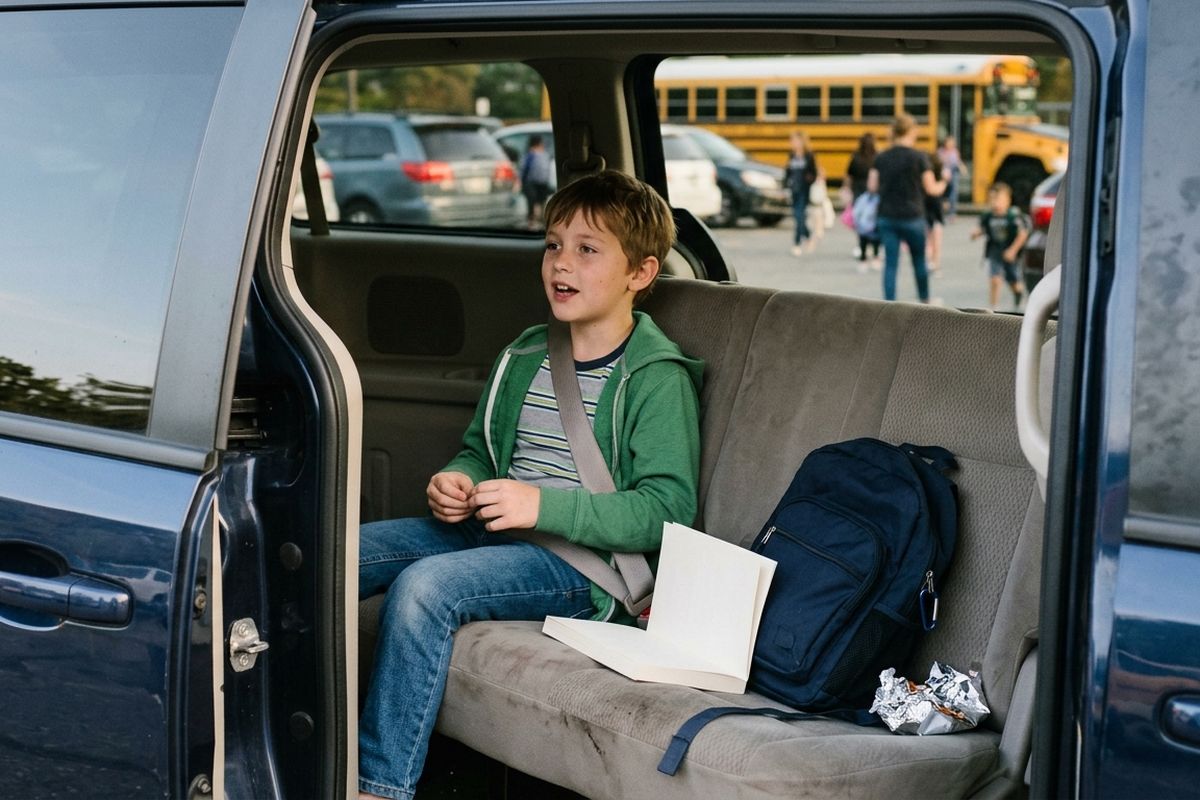
Retelling doesn't need a book open on the table. The car is one of my favorite places for it, partly because nobody can dramatically slide under the chair to escape.
Ask your child to tell you what happened in the chapter they read, the movie they watched, or recess. It all builds the same muscle: picking the main parts and putting them in order. (It also works better than "how was school," which mostly gets "fine." There are better ways to get real answers about the school day, and a retell is one of them.)
For younger kids, use fingers. Thumb: beginning. Middle finger: middle. Pinky: end. For older elementary kids, try the story shape many teachers use: somebody wanted something, but there was a problem, so they tried something, then it ended a certain way.
For The Three Little Pigs, that sounds like: the pigs wanted safe houses, but the wolf kept blowing them down, so the last pig built with bricks, then the wolf couldn't get in. Simple. Sturdy. No glitter required.
Keep it short, and resist the urge to pounce when they mix up the order. If they announce that the wolf was in The Snowy Day, you can just say, "Wait, I thought Peter was walking in the snow. Tell me that part again." The goal isn't a book report. It's noticing that stories have a shape: characters want things, problems get in the way, endings connect back to beginnings.
When it's worth a word with the teacher
If the gap between smooth reading and understanding lasts more than a few months, or shows up in school reading too, mention it to the teacher. One calm sentence does it: "They can read the words, but they often can't tell me what happened. Are you seeing that at school?"
Teachers have simple ways to check. They'll listen to your child read, ask for a retell, look at whether the book level fits, or see if your child understands better when the text is read to them. This is common, and it doesn't mean anyone has failed the reading test of life.
What helps most at home is keeping reading warm. Keep reading aloud to your child well past the age when they can read alone; hearing a story without doing the decoding is where a lot of the meaning-making gets practiced. And talk about books at dinner the way you'd talk about a funny thing that happened at the grocery store. Who surprised them. Who annoyed them. Which character they'd invite over, if fictional characters could please wipe their shoes before coming in.
A child who loves stories gets many chances to grow into the meaning part. Sometimes they just need an adult beside them saying, "Hold on. Let's see what this page is really doing."


