

The kitchen-table math meltdown has a very specific look: pencil dropped, worksheet wrinkled, your child insisting they "just know" the answer is 11, but also maybe 17. Addition and subtraction seem so small from the adult side. From the kid side, there are several quiet steps between counting fingers and doing 8 + 5 in their head.
Stage one: counting everything from one
A kindergartner sees 3 + 4 and makes three fingers on one hand, four on the other, then counts the whole group: "1, 2, 3, 4, 5, 6, 7." They're not being slow. They're building the idea that addition means putting groups together and that the last number said tells how many.
You'll see the same thing with objects: three cereal pieces on the napkin, four more, then count every single one. In early 1st grade many kids still do this, especially when the numbers are new or the worksheet has tiny boxes that make everyone cranky.
This stage matters because kids are juggling three things at once: the written symbol, the spoken number, and the actual amount. That's a lot for a six-year-old who also has a loose tooth and one sock twisted inside their shoe.
Counting all in kindergarten or early 1st grade is usually normal. The question is less "are they using fingers?" and more "do they understand what the fingers mean?" There's a whole separate answer to the finger question in counting on fingers: fine at five, fine at eight?
Stage two: counting on from the bigger number
This is the first real shortcut, and when it clicks, teachers notice.
Instead of building both groups for 4 + 3, your child starts with the bigger number: put 4 in your head, count up 3. "5, 6, 7." They don't have to count to 4 first because they trust that 4 is already there. That trust is a big deal.
At first, kids may count on from whichever number comes first, so for 2 + 9 they'll count up nine times from 2, which works but takes forever. A teacher might nudge: "Could we start at 9 and count two more?" Same problem. Less work.
You can hear this stage during homework. A child taps the table three times, or uses fingers only for the part they're adding on. That's progress, not failure. And if they say "I did it in my head" while you clearly saw three tiny finger taps under the table, let them have the win. Under-the-table math is still math.
Stage three: making ten
This is why teachers spend so much time on "partners to 10": 1 and 9, 2 and 8, 3 and 7, 4 and 6, 5 and 5. It looks like a lot of drilling for something tiny. It is not tiny.
Making ten is the bridge from counting to mental math with bigger numbers. Instead of 8 + 5 being five slow counts up from 8, a child can think: 8 needs 2 to make 10, break 5 into 2 and 3, so 10 and 3 make 13.
That's not "new math" being fancy. It's what fluent adults do so fast we forget we're doing it. If you add 39 + 6 in your head, you probably think "39 plus 1 is 40, then 5 more." Same idea.
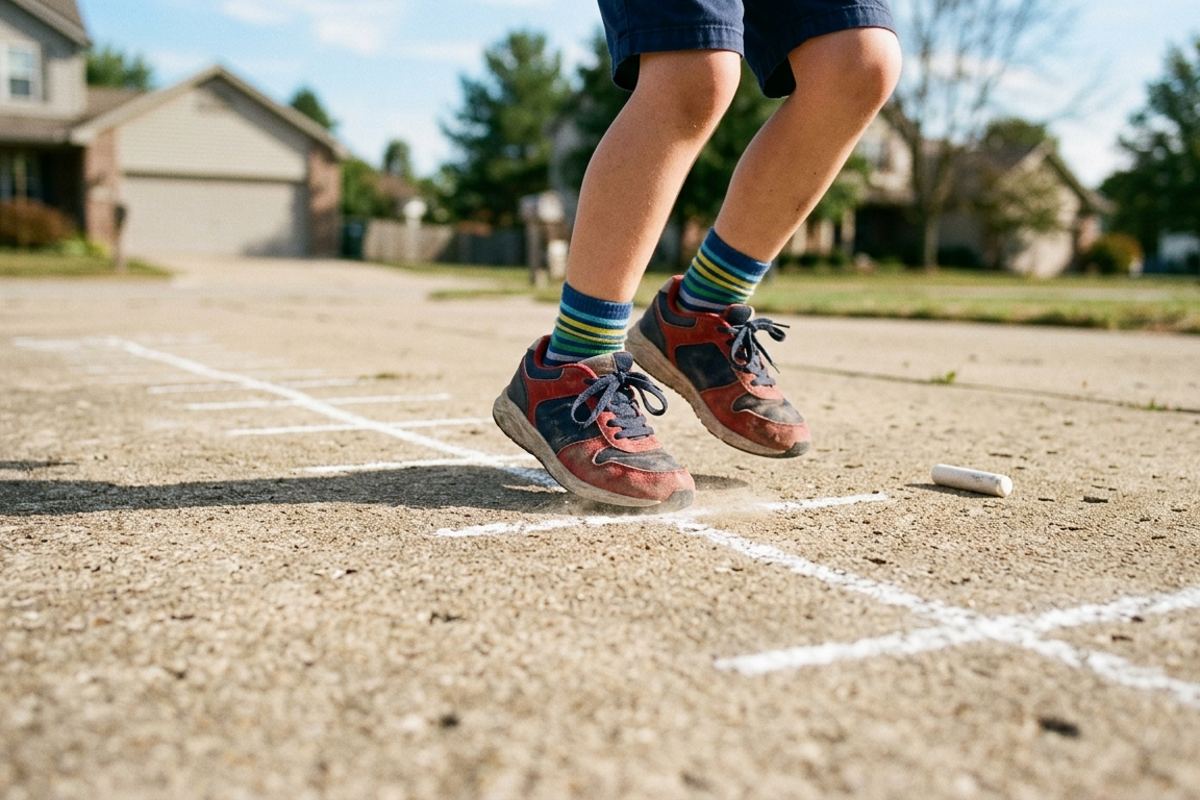
Kids usually need to see it with objects first. Ten-frames help, and so do egg cartons, pennies, and sidewalk chalk circles. Try asking "how can we make 10 first?" instead of "what's the answer?" It points your child at a strategy instead of a guessing contest.
Stage four: knowing facts, and borrowing from the ones you know
By the end of 2nd grade or so, many schools hope kids are fluent with facts within 20. That doesn't mean firing off answers like a tiny accountant. It means the facts are familiar enough that they stop slowing everything else down.
Fluency grows from patterns. Doubles come first because they have rhythm: 6 + 6, 8 + 8. Near-doubles ride along: if 6 + 6 is 12, then 6 + 7 is one more. Teachers call these derived facts, though you don't need that term at home unless you enjoy sounding like a textbook at dinner. Your child uses a fact they know to build one they don't know yet.
The normal range here is wide. Some kids memorize early. Some understand the math well but retrieve slowly. Some freeze when timed even though they can explain everything with blocks. What fluency is, and how to build it without tears, gets a fuller treatment in math facts fluency.
If fact practice always ends in tears, mention it to the teacher. Not in a panic. Just "we're seeing a lot of stress with math facts at home, what are you seeing in class?" That conversation saves a lot of pencil snapping.
Subtraction runs a stage behind, on purpose
Subtraction is harder because taking away is less visible than putting together. With addition the group gets bigger; you can watch it happen. With subtraction something disappears, and your child has to track what's gone and what's left. Rude, honestly.
At first subtraction is concrete: nine crackers, eat three, count what's left. Then kids count backward: for 13 - 4, "12, 11, 10, 9." Counting back works for small numbers but gets clunky fast. Try 52 - 48 by counting backward. No thank you.
That's where counting up comes in. Some teachers call it the shopkeeper's method, because it's how people make change. For 13 - 9, your child thinks "9 up to 10 is 1, then 10 up to 13 is 3 more, so 4." This is smart. It is not cheating.
For numbers that sit close together, like 100 - 97, counting up beats counting back every time. Adults do it constantly: hand over $20 for an $18 total and nobody counts down from 20. You may see your child mix methods for a while, counting back for 10 - 3 and drawing circles for 15 - 6. Strategy switching is part of learning, even when the homework page looks like a small math storm passed through.
Helping at home without turning into a tutor
You don't need to recreate school at the dinner table. Please don't. Home practice works best short, casual, and finished before anyone starts bargaining for screen time.
Breakfast is perfect for tiny math. "You have 6 cereal pieces. I'm giving you 3 more. How many now?" Later: "You had 9, you ate 4, how many left?" Food math has a built-in cleanup plan.
Dice are sneaky practice: roll two and add them, or play "who has the bigger sum" with a deck of cards, face cards removed. If your child likes practicing on a screen, a few minutes with a simple math-facts app feels more like play than flash cards.
Finger counting is fine. Truly. The gentle nudge comes when your child counts everything from one for facts they've seen many times. Then you can ask, "Can you start with the bigger number?" or "Do you see a way to make 10?" One nudge is teaching. Five nudges is a lecture, and children can smell a lecture from across the house.
Praise the strategy, not just the answer: "Starting at 8 was smart." And stop while it's still going okay. The real goal is for your child to see numbers as movable and friendly, not as little traps lined up across the page.


