

The phrase usually shows up at curriculum night, right after the teacher says “phonics scope and sequence” and everyone nods like they didn't just lose the thread. Then a little paper book comes home in the backpack: “Pam had a cap. Pam can tap.” Your child reads it with enormous effort, and you quietly wonder whether this is real reading or some kind of tiny-word punishment.
Decodable text, translated
Decodable text is reading material built almost entirely from the letter-sound patterns your child has already been taught. If the class has covered short a plus m, s, t and p, the book might say “Sam sat. Tam pats Sam.” Will it win a Caldecott? No. Will anyone request it at bedtime? Also no. But every word in it was chosen on purpose.
A true decodable doesn't ask a beginner to read patterns nobody has taught them yet. It stays close to the phonics lessons happening at school. Short vowels this month means lots of cat, map, sip, log, bug. Once digraphs and vowel teams show up in class, the books add ship, chop, rain, seed.
Compare that with a predictable reader, which sounds like “I see a dog. I see a cat. I see a horse.” Those lean on repetition and pictures to carry a child through the page. A decodable is more like a little phonics gym. Not fancy. Very sweaty.
Why those weird little sentences exist
Beginning readers need successful sounding-out practice, and that's the whole reason these books read the way they do.
Early reading is several jobs at once: look at the letters, remember the sounds, blend them, check whether the result makes sense. That's a lot for a six-year-old who is also thinking about snack. Decodable text keeps the job winnable. Your child points at mat, says /m/ /a/ /t/, blends it, and gets that small real victory: I got it.
That feeling teaches something bigger than the word. Kids learn that when they look carefully at the letters, the word gives itself up. Nobody thinks “The tan cat can nap” is literature. It's there so the child reads the actual words instead of guessing from the picture or reciting what an adult read yesterday. The book is saying, in its clunky way: use the code, the code works.
Decodable vs. leveled readers: the quick difference
In a book bag they look alike. Thin, short, big font, lots of pictures. But they ask for different strategies.
A very early leveled book repeats a sentence frame: “I like apples. I like bananas. I like grapes.” After a page or two a child cracks the pattern and can “read” the book from memory, rhythm and picture clues. That can build confidence. It can also fool adults for a surprisingly long time. Cover the picture or break the pattern and things fall apart; the child looks up, smiles sweetly, and guesses “monkey” because there's a monkey on the page. Fair guess. Wrong job. If that sounds like your kid, there's a whole article on what to do when a child guesses at words.
Decodables pull the eyes back to the print. If the page says “The ship is red,” the picture won't save you. Your child has to notice the sh and the short i. The print is the main event.
None of this makes leveled books evil. Many teachers use both, and predictable books do help with language and book handling. A quick home test, though: if your child can read the page with the book upside down, it's not doing much decoding work.
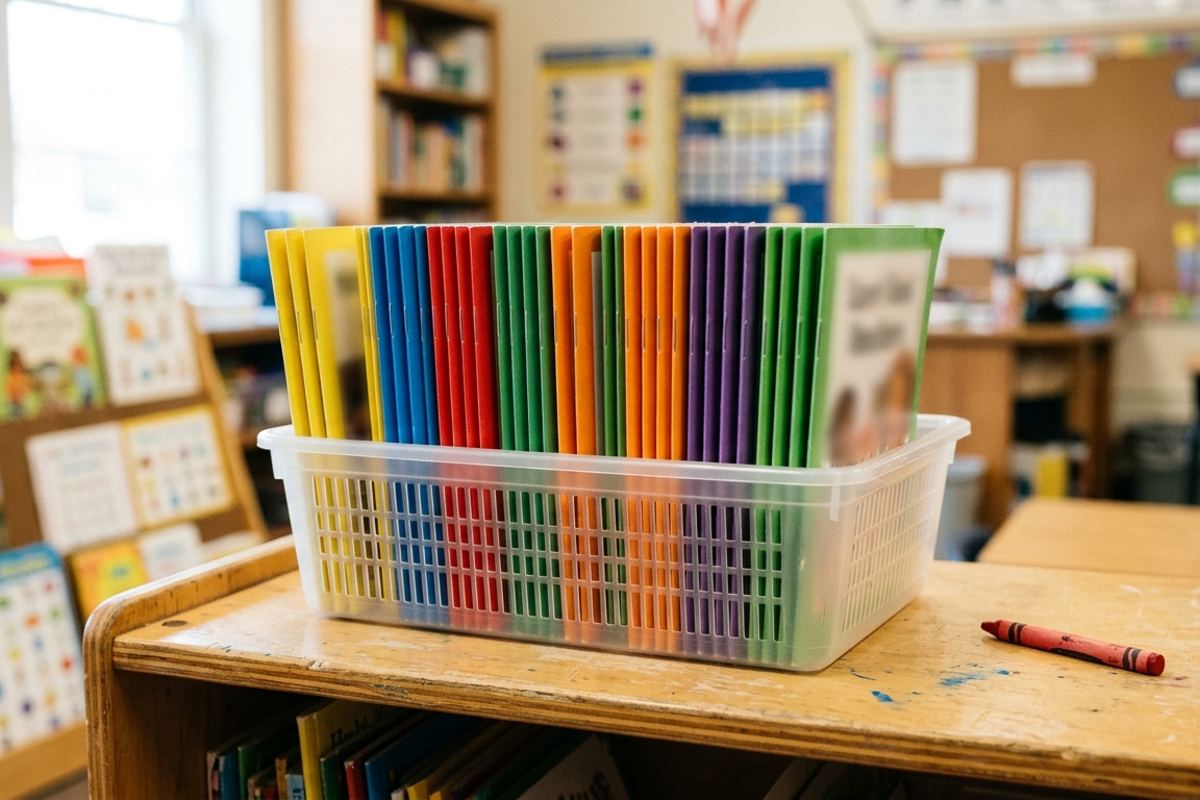
Does your beginner need them?
For most kids, decodables earn their keep from kindergarten through 2nd grade, while phonics is actively being taught. Some kids need that stretch to be shorter, some longer. The grade number matters less than where your child is in learning the code.
If school sends decodables home, use them. They're usually matched to what the class just learned, even when they look painfully simple. A book with ten short-a words might be exactly right this week. If school doesn't send them, no need to panic-order a giant box at 10:43 p.m. There are cheap sets online, and many libraries now stock them if you ask the children's librarian. Say the word “decodable.” It will not be the strangest request of their day.
What to check before buying or borrowing:
- The book names the pattern it practices (short a, sh, silent e)
- Most words can be sounded out with patterns your child knows
- Only a few tricky sight words per page
- Clear print with room to track under the words with a finger
Keep home sessions short. Five to ten minutes is plenty. Have your child point under each word, and when they guess, try a gentle “check the letters.” And keep real books in the mix: picture books at bedtime, silly poems, cereal boxes, birthday cards from Grandma. Decodables build the engine. Regular books are the reason anyone wants an engine.
When to move on
Kids are ready to leave decodables behind when sounding out stops eating their whole brain.
You'll notice the little books going fast, almost too fast. New words in regular picture books stop causing a freeze. Mistakes still happen, because readers make mistakes, but they come from the letters now, not from the nearest illustration. And your child starts complaining the books are boring, which is annoying, because they're right.
At that point real books win: early chapter books, funny picture books, nonfiction about sharks or volcanoes or whatever topic has taken over your house this month. Keep a few decodables around for a younger sibling or a quick warm-up reread, but don't let them stay the whole diet. Word games help keep the letter-level habit sharp without feeling like practice; a quick round of hangman scratches the same itch.
One more thing. If your child still guesses constantly, avoids reading, or can't sound out simple words after months of steady teaching, mention it to the teacher. Not a midnight panic email. More like: “I'm noticing lots of guessing from pictures at home. What are you seeing at school?” They can tell you whether it's normal for this point in the year or worth a closer look.


