

A fluency score on a progress report lands oddly. Your child can read, mostly, so why is there a number attached to it now, like a speed limit posted in the reading corner? Or maybe nobody mentioned a score at all and you just listened to your kid rip through a page in a flat little robot voice, technically reading, while Frog and Toad quietly deserved better.
Fluency is three things, and speed is only one
Fluency is rate, accuracy and expression. Rate is how fast. Accuracy is whether the words are actually the words. Expression, which teachers call prosody, is the part that makes reading sound like a person talking instead of a grocery receipt printing at self-checkout.
Schools measure it because it's a quick window into how automatic reading has become. A child who stops to solve every third word is spending everything they have on decoding, and there is not much left over for noticing that the character is upset, or that the joke was a joke, or that the pigeon should not be allowed near that bus.
The number on its own can mislead, though. A kid who reads fast while dropping word endings and steamrolling every comma is not fluent, whatever the score says. A kid who reads a bit slower, accurately, with phrasing that holds together, is often further along than the report suggests. I had plenty of first graders who could win the race down a page and then have no idea what happened in the story. Smooth beats frantic, which is also true of bikes.
It helps to know what the rest of the report card is doing at the same time, and what those grades and codes actually tell you is a useful companion to a fluency number.
Robot reading, and what it tells you
Robot reading is what it sounds like. Every word gets identical weight. No pause at the comma, no lift at the question mark, no alarm when the bear discovers the honey is gone. One steady line of beeps.
Usually it means decoding is still eating all the attention. Your child may know the sounds and even know the words, but getting through the sentence is work, and expression waits at the back of the line behind remembering what silent e does and not losing their place again.
Sometimes it's just a habit. Some kids decide that reading aloud is a performance of saying every word correctly, so they switch off their own voice to do it. I used to tell mine, "read it like you're talking to me, not like you're reporting to a tiny principal who lives inside the book." That got a laugh, and the laugh usually got me a better second try.
There's a third possibility worth sitting with. If your child reads the words accurately and still can't tell you who did what or why anybody was angry, then more speed practice is aimed at the wrong target. That pattern belongs to kids who can read every word and still lose the story, and it needs a different kind of help.
What the numbers actually mean
Most schools use a benchmark check a few times a year: one unfamiliar passage, one minute, teacher marking errors. You may see it written as WCPM, words correct per minute.
The ranges vary by test and by district, and kids arrive at them on wildly different schedules, but many teachers are watching for something in this neighborhood:
- End of 1st grade: roughly 50 to 80 words correct per minute
- End of 2nd grade: somewhere around 90 to 120
- Third grade: often 100 to 140
Kindergarten generally isn't timed at all. There, fluency looks like recognizing common words and sounding less choppy on a familiar patterned book.
Those numbers are a flashlight, not a verdict. They tell a teacher who might need more work on decoding, sight words, phrasing or plain confidence. And a score drops on an unfamiliar passage, which is the whole point of using one. A child who has read the same green-eggs book twelve times sounds like a small stage actor. Hand them a cold passage about desert animals full of nocturnal and burrow, and it gets bumpy again. Nothing was forgotten over snack.
Fluency scores and reading levels also get bundled together in conference conversations even though they measure different things, so if the letters and colored bins have started to blur, reading levels in plain parent language untangles them. One more classroom truth: a child can be fast enough on paper while nobody in the story sounds alive yet.
Rereading: the boring thing that works
Rereading is not exciting. Nobody has ever gasped with delight at the dinner table about it. It works anyway.
The first read is for solving words. The second is smoother. By the third, most kids have enough attention free to notice punctuation and meaning and to sound like themselves. Adults do the same thing, which is why the bedtime book goes better on night two, once we've stopped tripping over the name of the fantasy kingdom.
At home this means one page, not a chapter. Read it to work it out, read it to smooth it, read it for the voices. Three passes and stop. The trick is giving the reread an audience so it doesn't feel like a punishment: the dog, who never corrects anybody and may snore supportively, a younger sibling, a line of stuffed animals, or you from the next room. Once in a whisper and once like a storyteller also works.
This is part of why kids who reread the same series eleven times are not stalling. Reading the same books again is fluency practice they chose on their own. In my classroom, rereading was where quiet readers surprised themselves. The child who mumbled through the first try would land a perfect grumpy-bear voice on the third.
Echo reading at the kitchen table
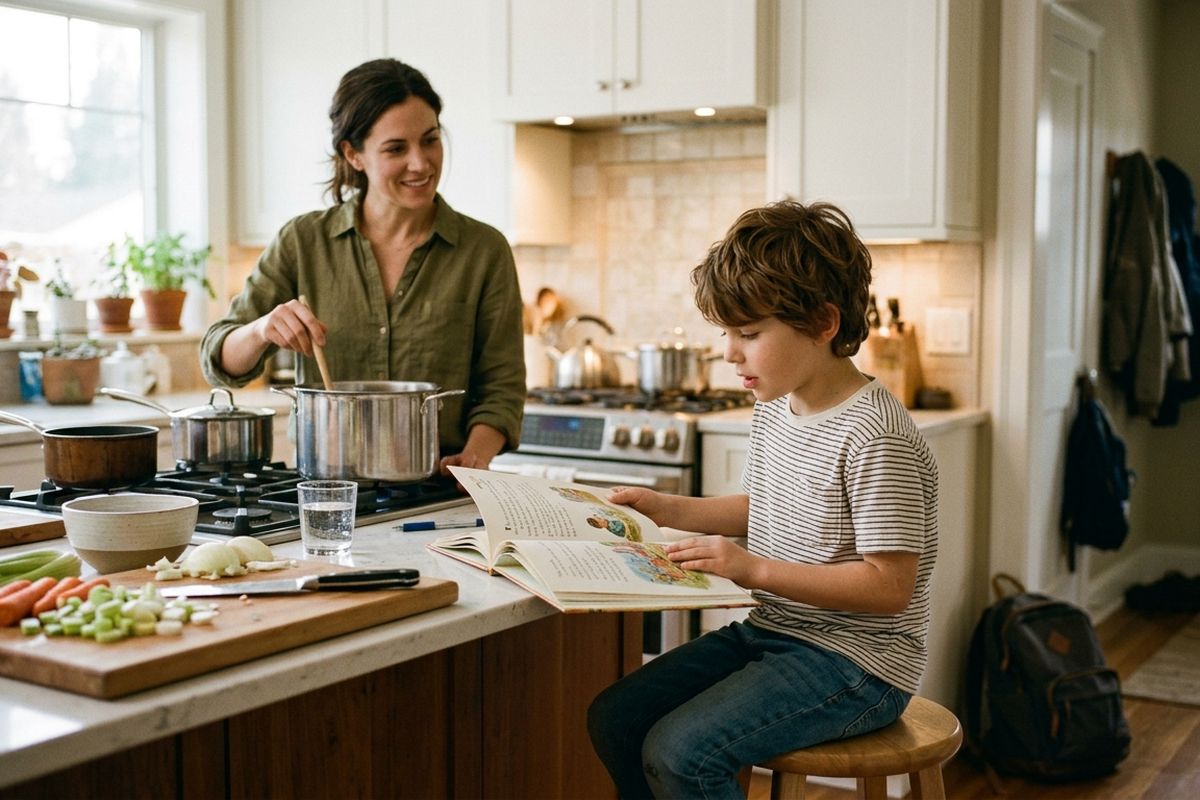
Echo reading is the kindest fluency tool I know, and it takes about ninety seconds. You read a line. Your child reads the same line back. That's the whole method.
You're modeling pace, pauses and expression, and your child gets to borrow your reading voice for a moment before they have their own. It works best with books that have real dialogue and bossy punctuation. Elephant and Piggie might as well have been designed for it. Any picture book with big feelings works: nervous squirrels, indignant ducks, anyone about to make a poor decision.
You read, "Wait," said the rabbit. "Did you hear that?" Your child echoes it. If it comes back flat, don't correct, just recast: "Ooh, make the rabbit a little more worried." Then let them go again.
Punctuation turns into stage directions. A period is stop and breathe. A question mark sends the voice up because somebody is asking something. An exclamation point gets the exclamation-point voice, though possibly not at full playground volume if the baby is asleep. Do four lines while dinner simmers and then quit while everyone still likes it. Fluency grows on small, steady, slightly-too-short practice that your child is willing to repeat tomorrow.


