
The library trip has a pattern now. Past the fiction shelves, past the display of picture books with friendly bears, straight to the shark section, like a very short marine biologist with a card. You suggest a story, just for fun, and get a look that says sharks are fun.
I knew this reader well. Mine sat in the reading corner with a battered animal book, whisper-reading the captions while everyone else picked out talking cupcakes.
The kid who reads to find things out
Some children read to know what happens next. Others read to know how deep the ocean goes, how lava moves, why snakes shed, and whether a megalodon would fit in the cafeteria.
At 6 that's the kid who announces at dinner that a blue whale's heart is the size of a small car and then waits for the table to grasp the gravity of this. They reread the same volcano book for a month, skipping to the eruption photos and the diagram of the Earth's layers. They read the caption before the paragraph and flip to the glossary on purpose.
At 10 it's weather disasters, ancient weapons, insects, or one specific warship, in a topic narrow enough that you hear yourself say you didn't know there were this many books about eels.
The worry that follows them around is "but she never finishes a book." For nonfiction that's the wrong ruler. A kid can get a great deal out of browsing, rereading, comparing two pages, studying a chart, and going back to the same spread over and over. What they're building is background knowledge and vocabulary, which is the part of reading that quietly decides how much of 4th grade makes sense later.
Shark books count
Take this as permission from a former early-grade teacher. Shark books count. So do trucks, tornadoes, germs, gemstones, presidents, planets and gross-but-true anything.
Nonfiction often runs harder than fiction written for the same age. A story says the dog ran fast. A shark book says the great white accelerates when it strikes. That second sentence is carrying a lot. The pages are dense with content words too: habitat, predator, camouflage, extinct, migrate, fossil. Kids stretch well past their usual level when the subject belongs to them. The child in my room who groaned through a leveled reader about a picnic would happily fight his way through "venomous," because snakes were involved. Motivation is a sturdy little ladder, and it's the same reason big words picked up in conversation stick better than words on a list.
One honest gap to watch: story stamina. Following a plot over many chapters, tracking why a character did something, filling in what the author didn't say. Those are separate muscles. Nobody needs to confiscate the shark books. There just has to be room next to them for something longer with a plot in it.
Captions and headings are a skill, not decoration
A nonfiction page looks cluttered to adults. To this kid it's the whole appeal. Headings, captions, labeled diagrams, bold words, sidebars, maps, the glossary, the index: that's not design, that's how the genre works, and schools teach it on purpose.
In the early grades we'd hold up a big book at circle time and ask where to look if you want to know what this page is mostly about. Kids learn that a heading is a signpost, a caption often tells you something the paragraph skipped, and the index is a treasure map, admittedly with less thrilling treasure than usual.
Two minutes at the kitchen table does the same work, no worksheet required.
- "What does the caption tell you that the paragraph doesn't?"
- "Why do you think they made that word bold?"
- "Can you find fossils in the index?"
- "Which part of the diagram helped you the most?"
Those questions teach a child to move around a page on purpose, which is exactly what science and social studies start demanding around 3rd and 4th grade. It's part of what the grades ask for as they go up, and it's easier to practice on a book about eels than on a study guide.
What to feed them
Keep the supply steady and let it be weird. Six straight weeks of deep-sea creatures is not a reading emergency. It's a research phase with pajamas.
- Series about animals, weather, space, history or machines
- A kids' magazine that comes in the mail, because mail is still fancy
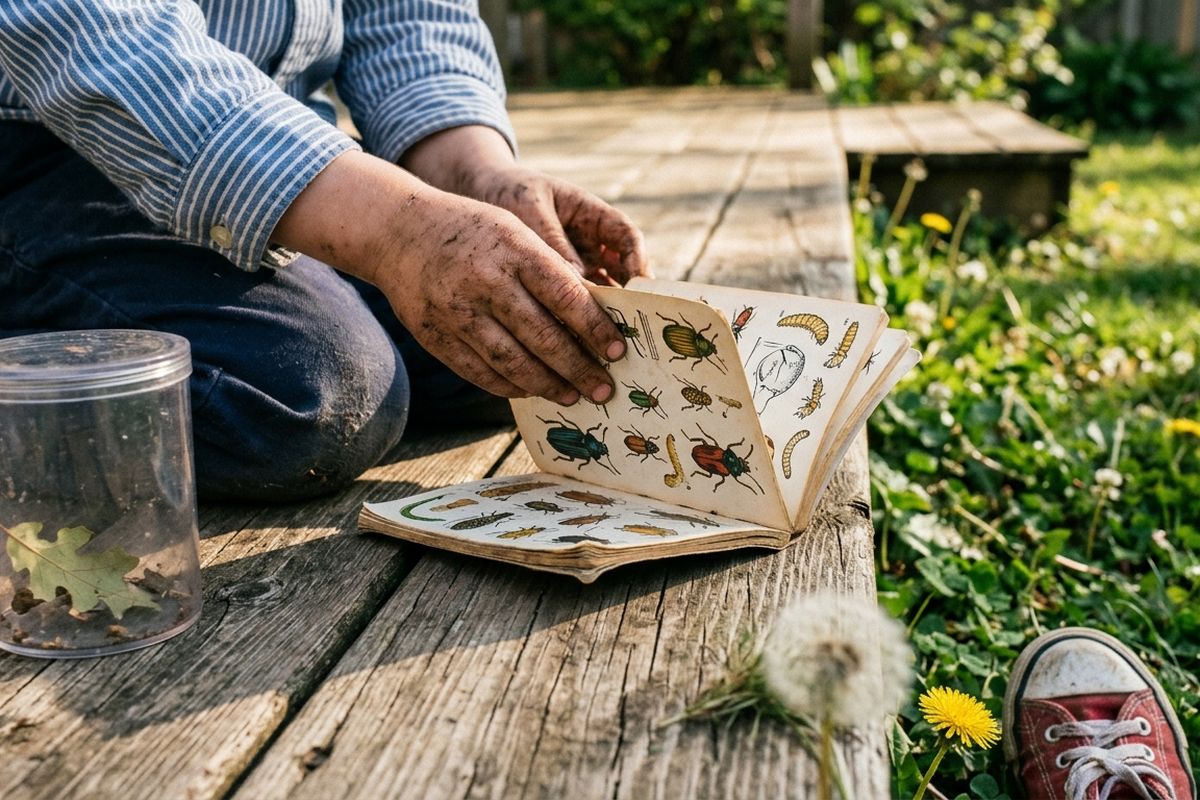
- Field guides for birds, rocks, bugs, trees, shells
- How-things-work books, cookbooks, museum guides, maps
- The manual for something in the house, if your kid likes diagrams and warnings in tiny print
Magazines suit this reader especially well: one article, a photo spread, abandon it, come back Thursday, still reading. Cookbooks teach sequence, measurement and following directions, with the natural consequence that somebody now expects brownies.
Ask the children's librarian where the nonfiction bins are and don't be put off by the numbers on the spines. A kid doesn't need the whole system, just "animals live over here" and "space is this row." My classroom nonfiction bin was always messier than the others, because hands were always in it. A messy nonfiction bin is a healthy one, and it's worth building a regular library habit around exactly this kind of digging.
Sneaking a story in sideways
Don't trade facts for fiction. Wrap story around the facts.
Narrative nonfiction is the shortest bridge: survival accounts, real expeditions, animal rescues, inventors, biographies written in scenes. Your child keeps the solid floor of this really happened while practicing how to follow events across chapters. Graphic-novel history works the same way, with the pictures carrying part of the load while cause and effect do the rest.
Then there's fiction with a fact engine. A mystery that runs on evidence. A historical adventure with real maps. A survival novel full of weather and animal tracks. If your kid loves dinosaurs, find the story where the dinosaur details matter. If they love space, find the one where the oxygen supply is not decorative.
And read aloud, because that's where you get to carry the hard part: the slow opening, the long chapter, the voice that makes a dull side character tolerable. Your child listens for motive and prediction without having to decode at the same time. Some of my most fact-hungry kids wouldn't touch a story alone and melted straight into one when someone read it to them, especially if I stopped halfway to ask why he did that. The small dramatic gasp is optional. It works, though.


