

The dinner table has a funny way of turning into a complaint desk: the broccoli is suspicious, someone is sitting too close, and the milk cup is apparently wrong. But tucked inside all that regular family noise is one of the best vocabulary builders you already own. No flashcards, no workbook. Just better table talk.
Why the dinner table outperforms word lists
Word lists look neat. Lines, checkboxes, maybe a highlighter. But kids learn words best when they hear them doing a job in a real sentence. At dinner, words come with clues: if you say the sauce is too tangy, your child sees your face, tastes the sauce, and connects tangy to something sharp. If Grandma calls the dog persistent because he keeps circling back to the chair with the easiest target, that word arrives with its own little story.
Mealtime also has one giant advantage: it happens again tomorrow. Kids need to bump into a word many times before they own it, and dinner serves up stale, crunchy, greasy, tender and unexpectedly spicy night after night without anyone announcing vocabulary practice. That kind of repeated, low-pressure exposure pays off later in books too; a child who has heard more words out loud recognizes more of them on the page. It's the same reason reading aloud stays valuable long after kids can read on their own.
Use the big word AND the small one
The simplest teacher trick going: pair a bigger word with one your child already knows.
“That's frustrating. Really annoying, right?” “This chicken is tender, soft enough to cut easily.” “He was reluctant to try it, kind of not wanting to.” You're not stopping the meal for a mini-lesson. You're tucking the meaning into the sentence the way you'd tuck a napkin under a wobbly chair leg. Quick. Done.
It works because kids understand more than they can say. A 5-year-old won't use frustrating yet, but after hearing you bridge it to “annoying” a few times, it starts making sense. Later it pops out on its own when a shoe won't go on, and you'll hear “this is so fwustwating” and get to take a quiet victory lap while wiping up applesauce. Feeling words are the richest vein: disappointed, generous, relieved, suspicious-of-that-casserole. The small word is the bridge. The big word is where you want them to walk next.
Questions that pull words out of kids
“How was school?” is a perfectly normal question. It's also where conversation goes to take a nap. A whole school day is too big; “fine” is the shortest escape route. (There's a full article on getting real answers to “how was school”, but the short version is: ask smaller.)
- “What was the loudest part of your day?”
- “What made somebody laugh?”
- “What was the trickiest thing your teacher asked you to do?”
- “What was the best mistake you saw today?”
That last one is a teacher favorite. Kids love reporting on general chaos without fully telling on a person.
Once you get a tiny answer, follow the trail with word choices. “Eli fell” becomes “Did he stumble, slip, or totally wipe out?” Three stronger verbs offered, zero test administered. “The game was weird” becomes “Weird like confusing, silly, or unfair?” You're handing them language for what they already mean. And some kids talk more with busy hands, so let them butter bread or line up carrot sticks like tiny orange soldiers. Eye contact across a table can feel intense after a long day; side-by-side jobs loosen the words.
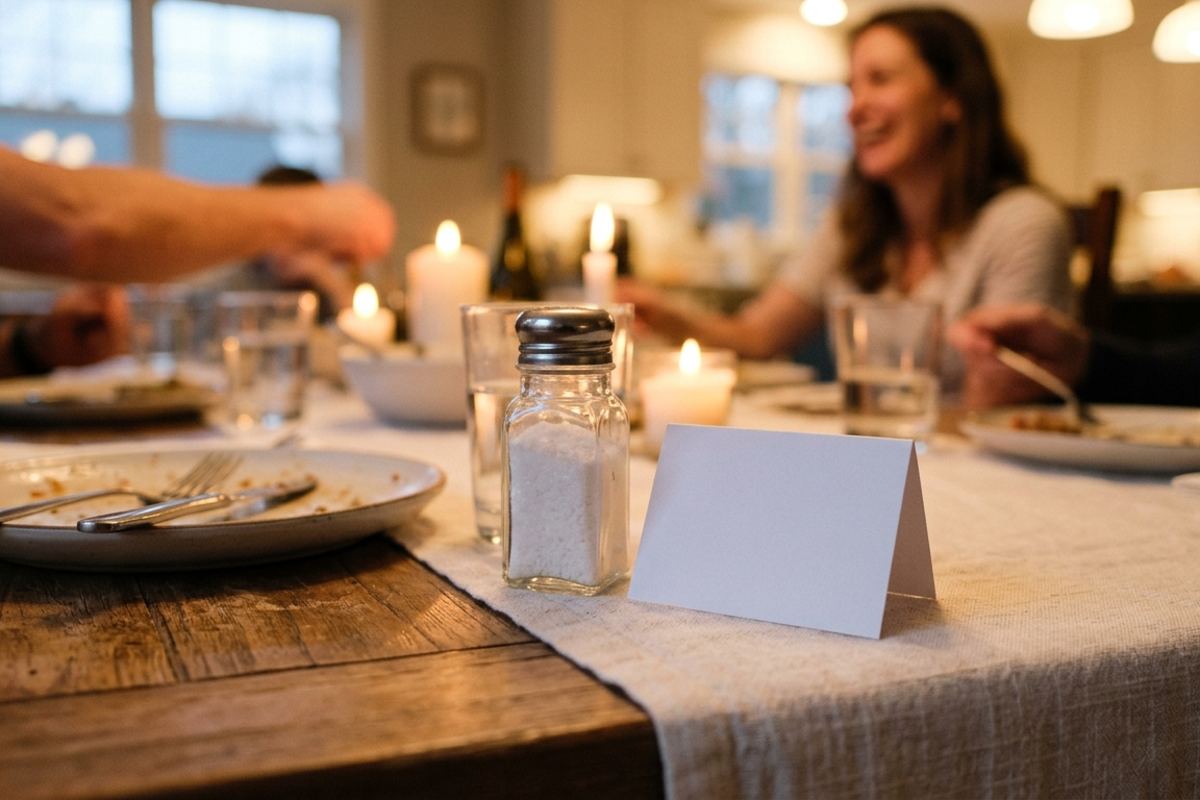
Steal words from dinner itself
The kitchen is basically a word museum with crumbs. Use the real names for what you're doing: drizzle the dressing, let the soup simmer, notice the potatoes are crispy outside but fluffy inside, explain the bananas are overripe and that's why they're spotty and extra sweet.
Scale it to the kid. A Pre-K child can handle sticky and smooth. A 2nd grader can chew on bitter, bland and crumbly. Upper elementary kids can play with caramelized, artificial or homemade, especially when the word is attached to actual food in front of them.
Let them describe tastes even when the review is unflattering. “This tastes like wet socks” is not a food critic's column, but it is descriptive, and you can build on it: “So it's musty? Kind of stale?” When “the carrots are bad,” ask bad how. Too mushy, too sweet, too earthy? Suddenly “bad” has cousins. Bonus for picky-eater households: specific words turn “I don't like it” into information. A kid may discover they mind the texture, not the flavor, which is gold for the family cook, also known as the person trying not to sigh into the pasta.
Word games between bites
Keep dinner games short enough that nobody's food gets cold. If a game needs a pencil, a timer and a peaceful sibling relationship, save it for the weekend.
Category games are the easiest entry: go around the table naming animals, breakfast foods, things that are slippery, words that mean “big.” For older kids, narrow it: foods that crunch, verbs you'd use in a soccer game. “Guess my word” is the other reliable one. “I'm thinking of something fragile, clear, and found in a window.” Glass! Now fragile has a context. Next round they give the clues, which will be mysterious, and that's part of the charm.
Would-you-rather carries a surprising amount of vocabulary if you add one twist: the answer needs a reason. Sour or spicy? Invisible or enormous? A damp cave or a scorching desert? And if your child likes word play, a quick after-dinner round of hangman or Boggle stretches the same muscles. Keep it light. The table talk is the main course.
Keep it talk, not a quiz
The fastest way to kill dinner vocabulary is to make it school with plates. Do not ask “what does reluctant mean?” in your official homework voice while your child is trying to enjoy a roll. That voice has powers, and one of them is making children forget every word they've ever known.
Model and move on instead. If your child says “I'm very exhausting,” answer with the word used right: “You're exhausted. Long day, huh?” No red pen. Mispronunciations get the same treatment: enjoy “humangus” privately, then hand back the real one. “Yes, humongous. That meatball is humongous.”
Follow their interests even when the topic isn't your dream conversation. Dinosaurs, cleats, Minecraft builds, the deep unfairness of assigned seats. Interest is sticky, and words attach to it. Manners still count and kindness still counts, but vocabulary grows best when kids feel safe trying words before they fully own them. Then pass the napkins, because someone is about to drizzle sauce with too much confidence.


