

The first time your child brings home a "real" chapter book, it feels like a little graduation ceremony. Then bedtime comes, they open to page one, and suddenly there are no full-page pictures, no cozy one-sitting ending, and a bookmark that seems to be judging everyone from the nightstand. The jump from picture books to chapter books is exciting, and also weirdly emotional. For kids, it asks for stamina. For parents, it stirs up the quiet worry: "Should my child be reading these by now?"
Why the jump feels bigger than it looks
Picture books are short, but they are not "easy." Plenty have rich vocabulary, tricky humor, and ideas that make adults blink twice. Still, the format supports the reader. The pictures carry meaning. The page turns create natural pauses. The whole story wraps up before the bath water gets cold.
Chapter books ask for different work. Your child has to remember what happened yesterday, keep track of characters without seeing them on every page, and read long stretches of text with fewer visual clues. That's a lot for a 1st or 2nd grader (roughly ages 6 to 8), and most kids need time to build that muscle.
There's an emotional piece too. Picture books feel safe. You can see the end from the beginning. A chapter book feels like a hallway with a lot of doors.
If your child can read the words but melts down after two pages, that's not laziness. Their decoding is probably ahead of their stamina. Very normal. Reading endurance grows the way running endurance grows: a little at a time, with snacks nearby if possible.
Early chapter books are their own genre
Early chapter books are not shrunken novels. They're a bridge, and the good ones are built like it: short chapters, larger print, plenty of white space, illustrations sprinkled through, a plot that moves in a straight line, and a cast small enough that nobody needs a family tree taped to the fridge.
Look for books that feel like picture books wearing grown-up clothes. Series help a lot, because once your child knows the world of the story, they don't start from scratch every time. Familiar characters lower the reading load. Graphic novels do the same job from another angle, and yes, they count as real reading, whatever anyone at the school book fair mutters.
A quick checklist for the shelf:
- Chapters around 3 to 8 pages long
- Pictures every few pages, not just at the start
- Repeated humor or a predictable rhythm
- Everyday kid problems: pets, school, siblings, missing cupcakes
- A main character your child actually likes
That last one matters more than adults admit. A book can be the "right level" and still be a terrible match for your kid. If they love goofy animals, do not start with a quiet historical story just because it has a gold sticker. Save that one for later.
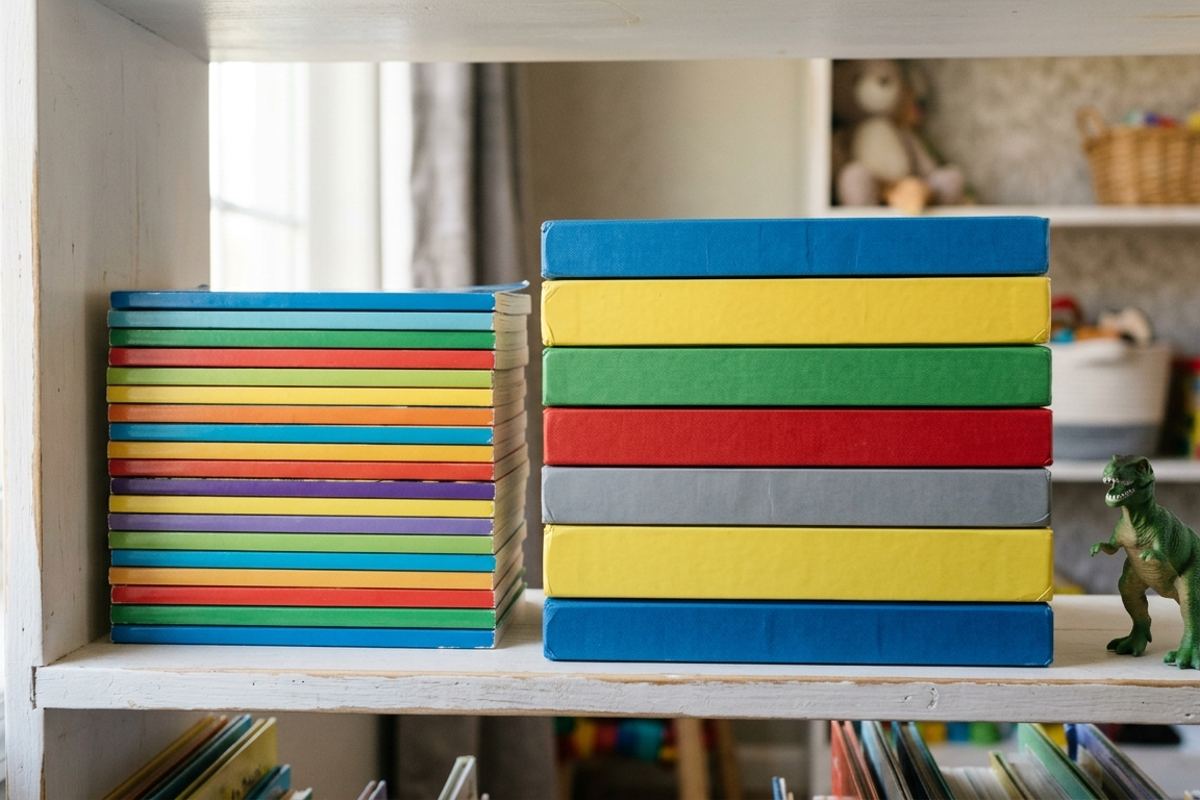
Picking the right first chapter book
A good first chapter book should feel a little easy. That sounds backward, especially when your child is proudly announcing "I'm ready for big books now." But the goal is not to prove something on page one. The goal is to finish and want another.
Use the five-finger check, kindly. Have your child read one page, and put up a finger for each word they can't figure out. Five fingers on one page means the book is better as a read-aloud for now. One or two tricky words with the story still making sense is about right.
Pay attention to the page itself. Some kids look at a dense block of text and mentally leave the building. Bigger font, wide spacing and chapter titles make a book feel possible.
And check the topic. A child who will happily read three pages about a dragon who burps smoke may refuse three sentences about a soccer team. Interest is not a bonus. It's fuel.
If you're standing in the library with twelve options and a child lying dramatically across the beanbag, use this rule: pick the book they're curious about, then go one notch easier than you think they need.
Bridge it: you read a chapter, they read a page
The cleanest way to help with the jump is shared reading. Not "I read, then you're on your own forever." More like passing a flashlight back and forth.
Read the first chapter aloud so your child can settle into the characters and the rhythm. Then hand off small pieces: one page, one paragraph, the speech bubbles if there are any. The exact amount matters less than keeping the story moving. You take over when the plot gets tense or the eyes get glassy. They reread the funny line, or the villain's dramatic complaint, ideally in the villain voice.
This works because your child gets real practice without carrying the whole book alone, and the pleasure of the story stays intact. If every chapter book becomes a nightly test, kids learn to avoid chapter books with the survival instincts of a raccoon near a garden hose.
Audiobooks help here too. Your child listens while following along in the print book. Some kids need to hear the pacing before they can create it in their own heads. That's not cheating. It's modeling, the same reason reading aloud stays valuable long after kids can technically read alone.
Do not retire the picture books
Once chapter books enter the house, adults sometimes act like picture books are baby books. Please don't pack them away.
Picture books keep doing big work. They build vocabulary, background knowledge, visual thinking, humor and emotional understanding, and many are written at a listening level far above what a young reader can handle alone. Your 2nd grader may read an early chapter book independently and still need you for the picture book about the moon, or migration, or one very rude pigeon.
There's also comfort in the old favorites. A child who stretched hard all day at school may not want to stretch again at 8:07 p.m. with toothpaste on their shirt. Some nights the best reading is the book they've heard so many times they can correct you when you skip a sentence. They will. With relish.
Keep a mixed basket: a few picture books, an early chapter book, a joke book, the magazine that somehow came home in the backpack. A nice bedtime rhythm is one chapter-book chapter plus one familiar favorite. Growing as a reader doesn't mean leaving beloved books behind. It means the bookshelf gets bigger. More stage-by-stage reading help lives in the Reading & Writing section, for whenever your child's reading life changes again, which tends to be every six weeks.


