

Your child walks out of the library with a stack of books, and three of them have speech bubbles, capes, or somebody yelling “AAAA!” across two pages. You smile at the librarian and privately wonder if this counts. Is your kid reading, or did they just find the book version of dessert?
The worry at the library checkout
Parents ask this quietly all the time. Sometimes with a laugh: “They only want comics.” Sometimes they lower their voice like the graphic novel might hear them: “Should I make them get a real book too?”
The worry makes sense. If you grew up being told books meant chapters, paragraphs, and no pictures after 3rd grade, a graphic novel can feel like a shortcut. Your child finishes one fast. They reread the same series. It can look like a step backward, especially if a kid who used to read chapter books is suddenly back to art on every page. And then there's the checkout-line comparison: one kid holds a thick fantasy novel, yours holds a book with a cat detective and a taco joke on the cover. Parenting has enough tiny panic buttons, and the library apparently installed one next to the self-checkout.
But graphic novels are books. Comics are reading. For many kids they're the bridge into more reading, and for some strong readers they're simply a favorite format, the way some adults prefer mysteries or long historical novels where everyone has a horse.
What the research actually says
The research is much kinder to comics than old playground rules were. Studies of children's reading habits keep finding that kids who choose comics are often kids who read a lot; comic reading isn't a sign of avoiding literacy, and for some kids it's the thing keeping the habit alive.
Literacy researchers also point out that comic vocabulary is surprisingly rich. A superhero story or historical graphic novel throws around words like reluctant, vanished, scheme, evidence, betrayed. Not baby words. Kids meet them in context, with facial expressions and action helping the meaning stick.
The other piece: reading images and words together is real comprehension work. Connecting dialogue, captions, panel order, expressions and what's left unsaid isn't less thinking. It's different thinking. Can both of these be true: “graphic novels count” and “kids still need practice with paragraphs”? Yes, and most teachers would say exactly that. Reading is not a one-food diet. More parent-friendly reading help lives in the Reading & Writing section whenever you have five quiet minutes, or one loud minute and coffee.
What a graphic novel makes a kid's brain do
A good graphic novel asks the reader to work between the panels. That blank gutter between one picture and the next? Kids fill it in. If one panel shows a raised eyebrow and the next shows a slammed door, the reader infers what happened. That's comprehension.
Comics also lean hard on dialogue and tone. When a character says “Great. Perfect. Just what I wanted” while standing in the rain with a broken umbrella, the reader has to catch sarcasm. Teachers spend whole lessons on tone; comics sneak it in with wet socks. The artwork carries meaning too: dark backgrounds for fear, tiny lettering for whispers, jagged bubbles for panic, a close-up that reveals doubt before the character admits it.
All of it transfers. Inferencing, sequencing, cause and effect, character motivation, vocabulary from context: the same muscles kids need for novels, textbooks and word problems, just with pictures helping spot the clues.
Why they hook reluctant readers
For a child who says “I hate reading,” a wall of text is a locked door. A graphic novel looks possible. White space, faces, fast page turns. The kid feels progress before their stamina runs out, and reluctant readers usually need the emotional win before the academic one. Finishing a book changes how a child sees themselves. Finishing three in a week is a small identity earthquake: suddenly the kid who “doesn't read” is waiting for the next volume.
Series do heavy lifting here. Once a child knows the world, starting the next book costs less; they already know the squirrel detective is dramatic and the dragon is probably going to make poor choices again. Graphic novels also support kids still building fluency, since the pictures confirm meaning and keep frustration from taking over. That's not the book being too easy. That's the book providing scaffolding while the child practices. If this is your kid, there are more angles in finding ways in for a reluctant reader.
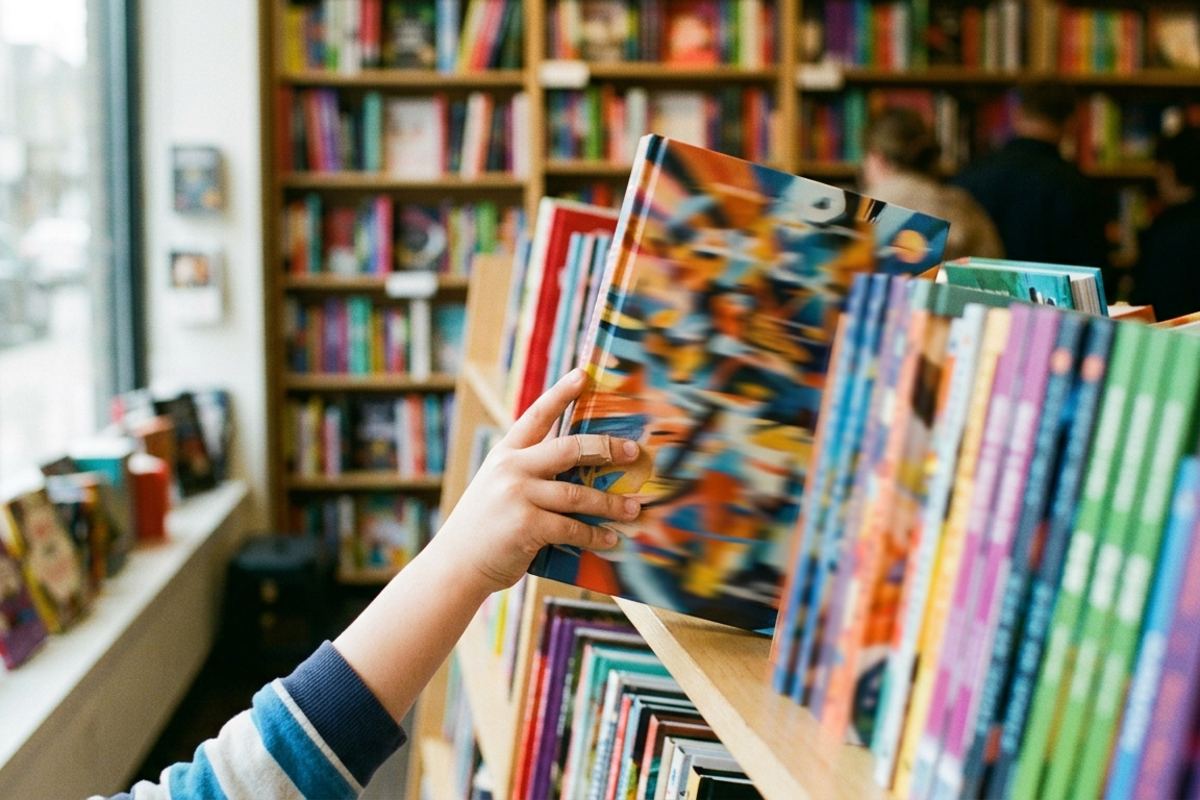
Strong readers grab them too, and that's fine
Strong readers love graphic novels for the same reason adults love a smart TV show after a long day: the format moves, it has style, it rewards rereading. None of that cancels the reading.
Some parents worry their advanced reader “could” be reading harder books. Maybe so. But difficulty isn't the goal of every book a person opens. Adults get this perfectly: a serious nonfiction book, then a beach mystery, then the same cozy novel for the third time because life was too much that week. Kids deserve some of that breathing room. A healthy reading diet mixes comics, chapter books, shark-or-space nonfiction, joke books, recipes and school reading. If balance is needed, “grab one graphic novel and one other book” works fine. Keep the tone neutral, because if comics become the forbidden book, some kids will defend them like a personal cause. Honestly, they'd have a point.
Rereading deserves a better reputation while we're at it. The second pass is where kids catch the background joke and the clue planted in chapter one. Rereading builds fluency and confidence. Not wasted time.
If you're still nervous, do this
Before making a rule, run a small experiment: read one yourself. The whole thing, not a page over your child's shoulder. Pick the first book of the series they love and see how much is actually happening on the page.
Then use your librarian. Children's librarians hear this question weekly and have gateway titles ready. “My 4th grader loves graphic novels and I'd like books that might lead toward prose too” is all you need to say. A few home moves that help without turning reading into a courtroom:
- Ask “which part made you laugh?” or “how did you know that character was lying?”
- Keep borrowing what gets read, even volume seven of something ridiculous
- Add, don't snatch: put a prose book next to the graphic novel pile
- Praise stamina (“you read for 25 minutes”) instead of judging the book (“that was easy”)
Many series lead kids toward prose on their own, because the humor or genre overlaps; a fan of funny school comics will often try a funny school chapter book once the appetite is there. The full jump has its own path, covered in making the move from picture books to chapter books. And if reading itself worries you, mention it to the teacher while your child keeps enjoying their comics. Pleasure reading and reading support can live in the same backpack.


