

The testing reminder flyer comes home crumpled in the backpack side pocket, and suddenly everyone in the kitchen gets a little weird. Your 4th grader says they're "fine," but they're chewing their sleeve. You're trying to decide whether to print practice questions, deliver a brave speech, or pretend the whole thing is just another Tuesday. Mostly: the Tuesday option, with better breakfast.
What testing week is (and isn't)
State testing is a snapshot for the school and the state. It shows patterns: which skills most kids have, where groups of students need support, how instruction lines up with standards. It's one piece of data, collected on a few mornings, from children who may or may not have slept well, liked the breakfast, or remembered where they put their sweatshirt.
It is not a verdict on your kid's intelligence, work ethic, or future. No bubble sheet gets that kind of power. In some districts scores help flag kids for extra reading or math support; in others they barely touch daily classroom life. Schools vary a lot here.
What helps at home is giving the test its right-sized meaning. "This is going to show everyone how smart you are" sounds sweet, but a kid hears the flip side: if I mess up, everyone will know I'm not. Better: "This gives your school a snapshot of what students know. Your job is to read carefully and use what you've practiced all year." And for the anxious ones, plainer still: "You are still you when the test is over." Some kids need that sentence more than another sharpened pencil.
The prep that actually moves the needle: sleep and breakfast
Testing-week prep is so boring it should come with a beige sweater. Sleep, breakfast, on time. That's most of it. A rested kid thinks better than a kid who stayed up for one more practice passage; sleep feeds attention, reading stamina, and the ability to not fall apart when question 17 has four answer choices that all look rude.
The night before, aim for normal bedtime or slightly earlier. Not a dramatic big-night-before-the-big-test bedtime with everyone whispering like it's the Olympics. Regular: bath, two pages of the book, the small argument about the stuffed animal pile, lights out. Breakfast just needs staying power. Eggs and toast, oatmeal, peanut butter on a waffle, the freezer burrito if that's what the morning allows. Testing week is not the moment to debut a new "brain food" your child has never eaten.
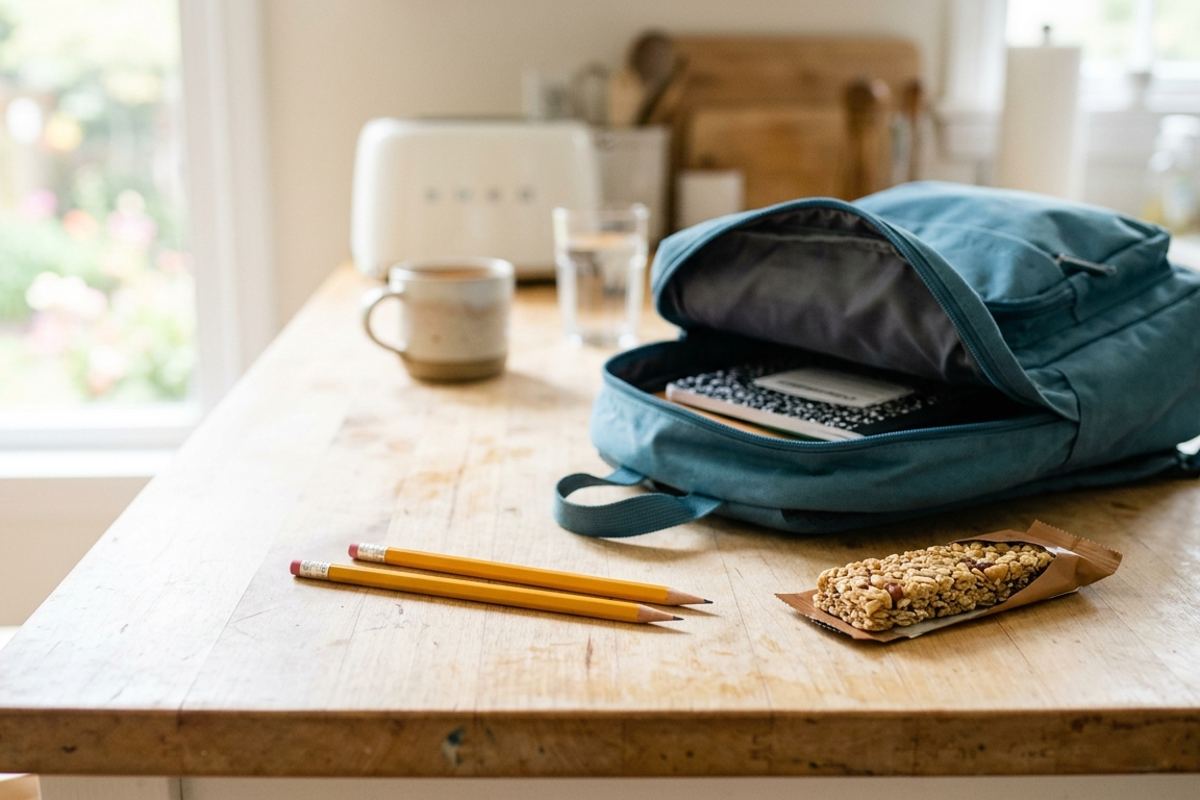
Beyond that: backpack packed the night before, hoodie and water bottle located, five extra minutes so nobody sprints to the car holding one shoe. Familiar beats optimized.
What to say the morning of
Kids are tiny weather stations for adult stress. You can say "no big deal!" with your mouth while your eyebrows hold a parent-teacher conference all by themselves. They notice. This runs in families, too; if tests made your own stomach drop as a kid, your math anxiety is catchable, and the fix starts with what you model.
Keep the morning message short, and match it to your kid. For the perfectionist: "You can miss some and still be okay." That line is a gift; many strong students think success means feeling certain about every question. For the rusher: "Your job isn't to finish first, it's to do careful work." For the freezer: "Start with what you know. If your brain blanks, one slow breath, then reread." Then stop. Hug, fist bump, silly handshake, send them in.
Skip the doorway pop quiz. "What's 9 times 7? How do you find perimeter?" turns the school entrance into a game show, and nobody needs that before 8 a.m. And if your child asks "what if I fail?", answer the feeling first ("I can tell you're worried"), then the simple truth: "It's one test. Your teacher knows way more about you than one score."
Don't drill the week before
The week before testing is not the time to teach fractions from scratch or become a main-idea machine. The learning happened all year. A sudden stack of practice passages at the kitchen table mostly treats parent anxiety, and kids read the subtext: if we're doing all this extra work, I must not be ready. Now they carry the content and the worry. That's heavy for a 9-year-old with a Minecraft backpack.
Keeping skills warm in tiny, normal ways is different. Read a chapter together and ask what the big thing was that happened. Play multiplication war with a deck of cards. Estimate the grocery total in the checkout line. If your kid likes screens, a few minutes of math games keeps facts familiar without turning the living room into test-prep headquarters. Five good minutes beats thirty cranky ones.
One real exception: format nerves. Some kids aren't afraid of the skill, they're afraid of the setup. A small preview helps: this is what a multiple-choice page looks like, this is how you skip and come back. Ask the teacher whether the class has practiced the format; most 3rd through 6th grade teachers do. If they say the kids are covered, believe them, and send your child outside to ride a scooter in lopsided circles until dinner.
After the test: ask about lunch, not answers
At pickup you'll want to ask everything. Was it hard? Did you finish? Did you check your work? Was there a passage about turtles? Resist. A question-by-question debrief teaches kids that tests are something to replay and worry over, and they usually aren't allowed to discuss the questions anyway. The test is done. The turtle passage can rest in peace.
Ask regular questions instead: how was lunch, did you get recess, what was the funniest thing that happened. If they volunteer "it was easy," go with "nice, glad it felt okay." If it's "it was awful," try "ugh, that sounds tiring. Glad it's over for today." Then snack. Many kids come home wiped out during testing week, not because anything went wrong but because sitting still and being careful for that long drains a person. Plan a low-demand afternoon: quiet play, a bike ride, a couple of easy puzzle games, an early night. Not the giant bedroom cleanout.
Scores arrive months later, when your child has changed shoe sizes and forgotten the whole thing. Read the report next to what you already know: report cards, classroom work, teacher comments, actual daily life. If a score looks much lower than expected, "does this match what you're seeing in class?" is the calm question to send the teacher. If the answer is "no, off day," file the paper and don't let one spring morning boss everyone around. Then ask your kid what they want for snack. That was the question they were hoping for anyway.


