

Your kid climbs into the car, drops the backpack with the usual thump, and announces in the flattest voice available that Mason is moving to Ohio in November. Then, before you've turned around, asks what's for dinner.
That whiplash is very elementary school. The news is enormous and the delivery is a weather report. Three days later the enormousness shows up anyway, usually over the wrong cup at breakfast.
It's a real loss, even at seven
Adults quietly rank griefs, and "a friend moved" lands near the bottom of the list, somewhere around a lost hoodie. For a seven-year-old it is not near the bottom. This is the person who saved them a seat, who knew the rules of the pretend game without needing them explained, who looked over during morning work with the face that meant can you believe we have to do this.
Elementary friendship runs on proximity. In my classroom, friendships lived in very specific spots: the cubby next door, the same square of rug at read-aloud, the corner of the carpet where two kids compared loose teeth instead of listening to Frog and Toad. Take the proximity away and the whole structure goes at once.
Grief at this age is lumpy and badly timed. Your child may be completely fine for three days, then fall apart because a sock feels wrong on the Tuesday after the moving truck. That isn't drama. The sadness finally found a door.
The true-but-useless lines are worth swallowing: you'll make new friends, at least you can text, Ohio isn't that far. All true. None of them help in week one. What helps is naming it plainly. "That's a big one. He was your person at school." Then stop talking, sit next to them, stir the pasta. If the friendship was already complicated, the usual elementary friendship troubles tend to resurface around a move, so don't be surprised if old stuff comes up with the new stuff.
The goodbye is worth doing on purpose
Kids do better with an ending they can see. A vague fade sounds gentler to adults and is harder on children, who end up wondering whether that was the last time long after it was.
It doesn't need to be big. Small and concrete beats a party with balloons and everyone's parents standing around feeling strange by the juice boxes. One last afternoon at the park. A photo of the two of them. A shoebox of the objects that mattered, which to you looks like a rock, four trading cards and a bracelet made of rubber bands and a paper clip, and to your child is proof the whole thing happened.
Let your child be the one who gives something. Being the giver feels steadier than being only the one left behind, and the note can say "I will miss sitting by you" with two letters backwards. Nobody's grading it.
And get the mailing address before the move, not after. Addresses vanish in moving week. Everyone means to send them, and then the tape gun disappears and the new school calls and somebody cries in the pantry. If your family is the one leaving, a move mid-year has its own tender mess on the other end.
Keeping in touch, honestly
Most elementary friendships fade after a move. That isn't a failure by your child or the other child or either family. A second-grade friendship was built on a bus seat, a lunch table and a shared recess game, and all three just left.
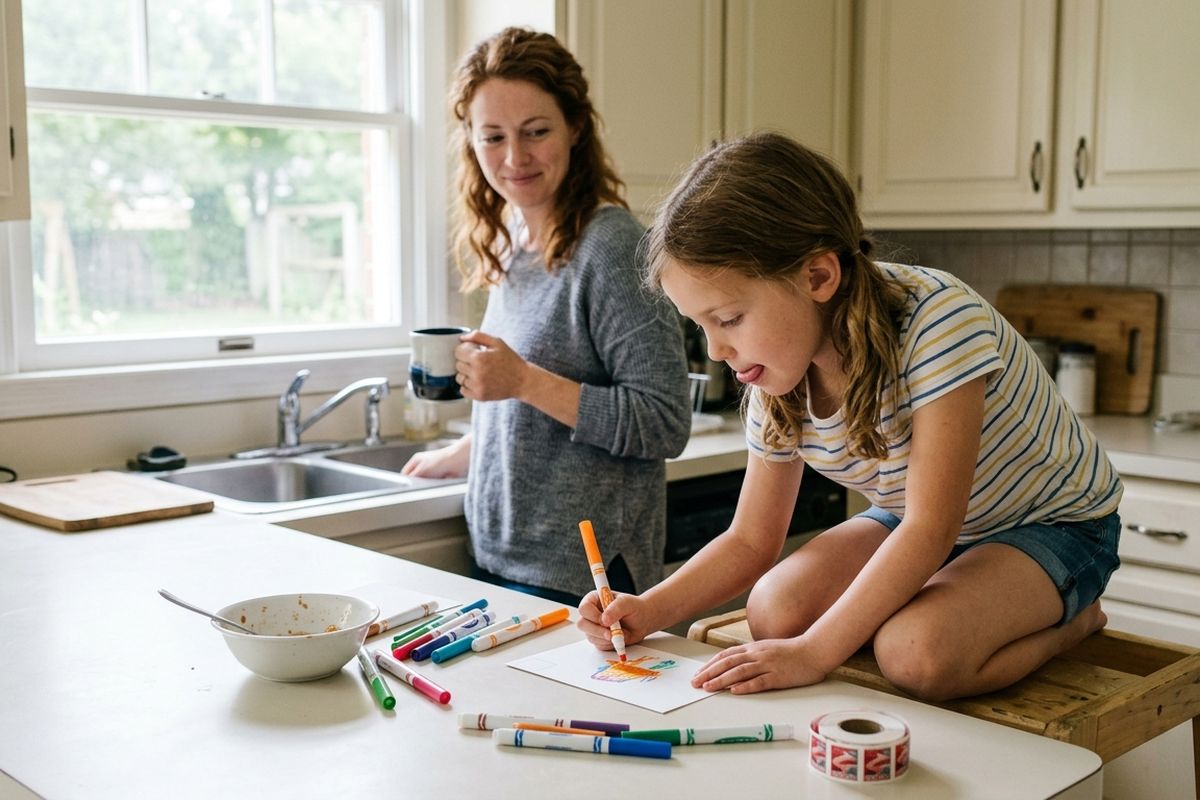
Some contact still matters, especially early. Mail holds up better than anything. A letter is a real object that lands on an ordinary Tuesday when the mailbox otherwise holds grocery flyers, and a seven-year-old can produce one in ten minutes if you keep the bar on the floor. "Dear Mason, I got new shoes. Recess is weird. Do you have a library? From Eli." That's the whole thing. If writing feels stiff, let them draw half of it; the tricks that get letters to grandparents actually sent work the same for a friend.
Video calls work, but conversation between two elementary kids lasts about ninety seconds before somebody puts their forehead on the camera. Give the call a job instead. Build with the same bricks, tour the new room, show the dog, hold up three things from the new school. Side by side beats face to face.
Set a rhythm you can keep. Once a month beats "we'll call all the time," which becomes guilt for the adults and disappointment for the kids. And prepare them for the drift, more than once: sometimes people write a lot at first and then less, and it doesn't mean he stopped liking you.
The awkward first weeks at school
The unstructured parts are the hardest. Recess, lunch, the line after the bell, walking in the door. That's where the friend was the plan.
When I taught little ones, I could see a friendship had shifted in the first five minutes of the day: a child at the cubbies a beat too long, fussing with a zipper that didn't need it, or hovering at the edge of the rug because the usual spot now felt occupied by a ghost. At home it shows up as clinginess, Sunday-night stomachaches, "recess is boring," a kid who has decided the bus is unbearable.
Give them a plan for recess rather than a friend. A friend is too big and too slippery to go find. A plan is one thing: go to the climbing structure first, get in the four-square line, ask to be scorekeeper, go to the library at lunch on Wednesdays if the school allows it.
Scripts beat pep talks about being brave. "Can I be on your team?" works. "What are you guys building?" works. "Do you want to be my friend?" is sweet and lands like a contract, and most kids have no idea how to answer it.
One playdate with one other kid does more than a week of encouragement. Ask who's fun at their table, or who makes them laugh even a little, and then text that parent. If every school question comes back "fine," there are sideways ways to find out what's actually going on that don't turn the car into an interview room.
Tell the teacher, in one sentence
Teachers can do a surprising amount quietly. Seating gets rearranged. Partner work gets paired on purpose. Somebody notices a kid wandering the blacktop alone before you ever hear "I have nobody" at home. None of it happens if they don't know.
The email is short. "Owen's close friend Ben moved last week, and we're seeing some sadness and Sunday-night stomachaches at home. Could you keep an eye on lunch and recess this week and let me know what you notice?" That's the who, the when and what you're seeing, which is everything a teacher needs at 7:42 in the morning.
Ask what they see, too. Plenty of kids look far more okay at school than at home, which feels confusing and is usually good news. School has structure, the pencil bin is where it always is, the day carries them. Home is where the feelings take their shoes off.
If the sadness sits on everything for more than a few weeks, including sleep, appetite and things they normally like, mention it to the teacher or your pediatrician. Not in a panic. Just out loud.
The part that takes longer than you want
Replacement isn't how it works. The next friendship doesn't arrive whole, it accumulates. They stand near the same kid in line. They laugh at the same joke at lunch. They both want the blue marker, or both notice that the class hamster looks like a tiny grandpa. Eventually there's enough shared material to lean on.
Expect a stretch with no best friend. It looks alarming from the outside, especially if your child always had one clear person, and in the middle of elementary school it's ordinary. Some kids need a while before they'll trust anyone new with their best dinosaur facts.
Keep the old friendship as an addition, not a competitor. A friend in Ohio doesn't block anyone here, and you can say so: you can miss Mason and still have fun with Zoe, in the same afternoon.
Also, try not to ask "did you play with anyone today?" every single day. It starts to feel like a test they keep failing. Ask smaller instead. Who was near you at lunch. What did you do first at recess. Did anybody say something funny. The answers will be tiny for a while, and tiny counts.


