

The moving boxes are only half the work. The harder part is watching your child stand in a new school hallway with a stiff backpack, a lunchbox they suddenly hate, and that quiet look that says "I don't know where anything is." Mid-year moves are clunky, but kids get steady faster when the adults treat the change like a real transition instead of a quick swap of buildings.
Before the move: what to tell them, and when
Tell your child as soon as the move is definite enough that you can answer basic questions. Not "maybe someday," and not the night before. Most elementary kids need time to ask the same three questions twelve different ways: Where will I sit? Will I have recess? Can I still talk to my friends?
Keep the first talk simple. "We're moving to a new house, and you'll go to a new school after winter break. I know that's a big change. We'll help you learn the new place." Then stop talking for a minute. Kids often need a little silence before they show you what they're actually worried about.
Give the move a timeline they can see. A paper chain, a calendar with stickers, or a sticky-note countdown on the fridge beats a long grown-up explanation. Mark the last day at the old school, moving day, and the first day at the new one.
Avoid overselling it. "You'll make tons of friends right away!" can feel like pressure. Try "the first few days may feel strange, and we'll take it one step at a time." Kinder, and usually truer.
If your child loves details, show them the school website, the lunch menu, pictures of the building. If more information makes them more nervous, give them just the next thing: "Tomorrow we drop off library books. Friday we say goodbye to your class." Some kids want the whole map. Some just need the next square on the board.
The paperwork and the curriculum gap
There is the emotional move, and then there is the folder move. The folder move is less tender, but it matters a lot.
Ask the old school for records before the last day if you can: report cards, attendance, test results, reading levels if they use them, and any IEP, 504 plan, speech or intervention notes. If your child receives services, keep your own copies. Schools do transfer records, but "in transit" is a mysterious place where papers go to nap.
Call the new school and ask what they need for enrollment. Usually it's proof of address, a birth certificate, immunization records, parent ID and previous school information. Some districts register online; others still love a stack of forms and a blue pen.
Now the curriculum gap. A mid-year move often means your child walks into fractions when their old class was still finishing multiplication, or into a poetry unit when they just left nonfiction. That doesn't mean your child is behind as a person. Schools just don't all march in the same order, which is easier to accept once you've seen what kids roughly learn in each grade and how much wiggle room there is inside it.
Ask the new teacher one direct question: "What are the two or three things my child needs to catch up on first?" Not everything. First.
Then keep home practice short and targeted for a few weeks. Ten minutes of math facts, a page of reading, a quick spelling review. That beats a full evening of "we must fix school." If it needs to not feel like school at all, a few minutes of a favorite game after dinner is a soft landing. And tell the teacher what your child just finished ("their last class had started long division"). Teachers can do a lot with that kind of plain information.
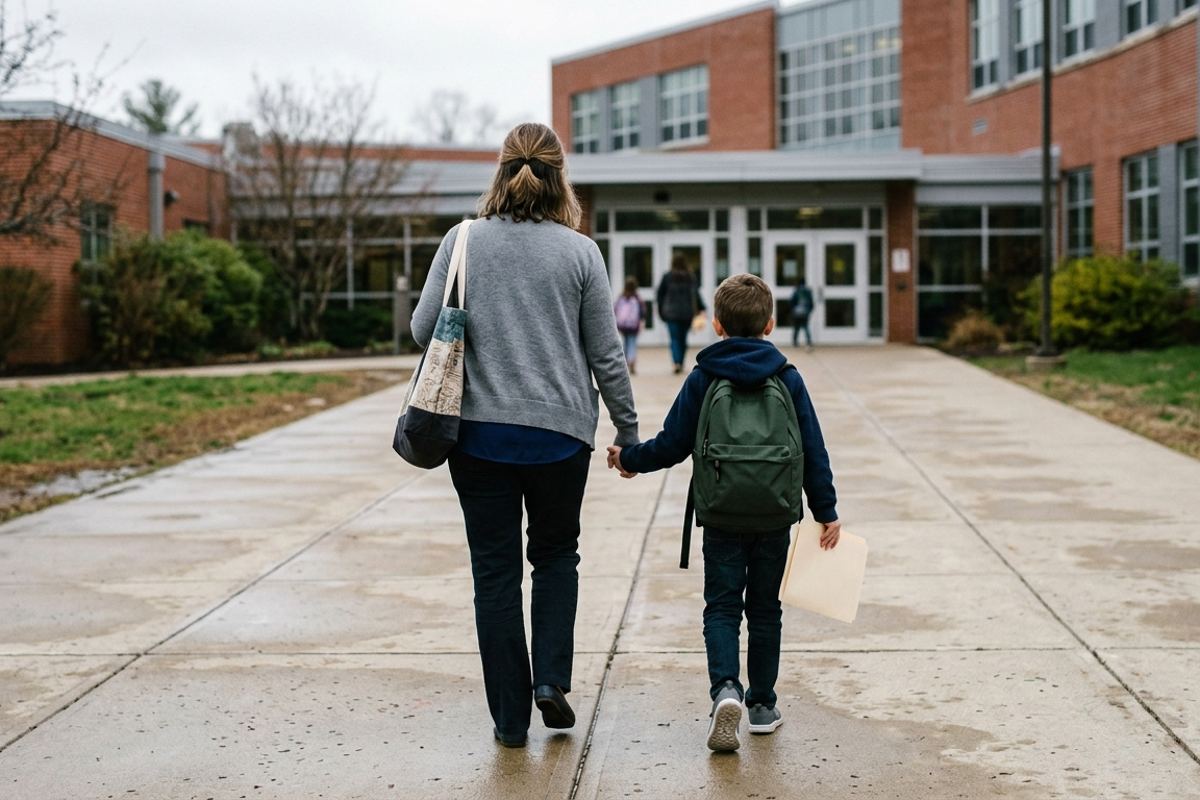
The first week: aim for one name
The first week is not about becoming class president. It's about learning where the bathroom is, how lunch works, and one child's name.
One name is a good goal. One friendly face at recess can change the whole day. Ask the teacher ahead of time if they can pick a kind class buddy, not necessarily the loudest kid. A calm helper who knows where to line up is gold.
At home, resist the big after-school interview. A child who held it together all day may crumble under "How was it? Did you make friends? Was the teacher nice? Who did you sit with? Did you eat?" That's a lot before the shoes are even off. Try smaller: What was one thing that was the same as your old school? What was different? Whose name did you hear today?
Pack familiar food. This is not the week to test a new thermos soup with floating green things. Expect tired, even happy tired; your child is decoding a new building, new rules, new voices and new social math all day long. Keep evenings boring on purpose. Dinner, bath, a book, bed. The glamorous life.
If schoolwork comes home messy, don't panic. New routines make even simple assignments feel harder. If homework turns into tears, send the teacher a short note: "We tried for 15 minutes and stopped. Still settling in." Most teachers would rather know than receive a page covered in sadness and eraser holes.
Watch the six-week mark
The first few days get all the attention, but the six-week mark is often where the real feelings show up. At first your child runs on novelty. New desk! New playground! Then the newness wears off, and they realize they are still the new kid.
Around weeks four to six, watch for changes in sleep, stomachaches, clinginess, sudden anger, or "I hate this school" after a day that seemed fine. Some of that is normal stress leaking out sideways. Kids don't say "I feel socially unsteady." They say "my socks are wrong," with the force of a courtroom objection.
This is a good time to check in with the teacher. Keep it short: "We're about six weeks in. How are they doing socially and academically?" Ask about recess and lunch, not just reading and math. For many kids the hardest subject in a new school is cafeteria seating.
If there's still no regular peer connection after several weeks, ask whether the teacher can pair them for a project or point you toward a club, chorus or library-helper job. Structured togetherness is easier than "go make friends" on a blacktop full of moving targets. The same moves that help a shy kid find their place in a new class work for a new kid, because for a while, that's what they are.
At home, name the pattern without making it huge: "Sometimes the first weeks are busy, and then the sad part catches up. We can handle that." If worry, sadness or physical complaints are intense or lasting, mention it to the teacher or pediatrician. No drama. Just more eyes on your child.
Keep one thread from the old school
A clean break sounds tidy to adults. For kids, one thread back to the old school is comforting. It says their old life didn't vanish just because the address changed.
Help your child pick one realistic connection. Not twelve group chats and a promise to visit every weekend. One thread. Maybe they mail a postcard to the old class. Maybe they video call one friend on Sunday afternoons for a month. Maybe they keep reading the series their old teacher started. If they were attached to a teacher, a short email with a photo from the new school is sweet: "I found the library. It has beanbags."
Keep the old connection warm, but don't let it crowd out the new one. If every afternoon goes to texting old friends, there's less room to notice the kid at the next desk who also draws dragons. You can say, "We'll call Sam after dinner. Before that, tell me one new name from today."
One thread. Not a rope pulling them backward. Just enough to remind them the old school mattered, and the new school can matter too.


