

The daily report comes in six words: "I didn't play with anyone today." Your stomach drops a little, even if your kid says it like they're reading the lunch menu. A new class can feel loud, fast, and already grouped-up, especially for a child who likes to watch before joining.
Shy is a temperament, not a problem to fix
Some kids enter a new classroom like they're running for mayor. They wave, announce facts about their dog, and have a recess plan by 8:17. Other kids stand near the cubbies and study the room. They notice who is loud, who is bossy, who shares crayons, and where the teacher keeps the extra pencils. They are not doing nothing. They are gathering data.
Slow-to-warm-up kids need time before jumping in feels safe. That doesn't make them unfriendly or "behind" socially; their comfort comes after observing, not before. For many shy kids, "just go talk to them" is about as helpful as "just do a cartwheel in the cafeteria."
The goal is comfort, not a personality transplant. You're not turning your quiet child into the kid who leads the class chant on pajama day. You're helping them find enough ease to participate as themselves. A useful parent line: "You're a person who likes to check things out first. That's okay. We can practice some ways to join when you're ready." It keeps the door open without making shyness the villain. The same approach carries over if the new class comes from a bigger upheaval, like switching schools mid-year.
One friend changes everything
A shy child does not need to be popular. Truly. No lunch-table fan club, no six birthday invitations by October. One steady person changes the whole shape of the school day: someone to look for at recess, to stand near during a fire drill, to notice when they're absent. An anchor makes the classroom feel less like a crowd.
Start by listening for repeated names, even tiny mentions. "Maya had the blue marker." "Eli likes cats." "Jordan sits by the window and hums." Shy kids rarely announce "I want to be friends with Jordan." They just keep noticing Jordan. You can nudge with gentle, specific questions: who seems kind in your class, who likes the same games you like, did anyone make you laugh today?
Once a name comes up twice, look for a small next step. A drawing for that classmate, an extra sticker, asking to be partners during a low-pressure activity. Keep it small enough that it doesn't feel like you're planning a friendship wedding. Teachers help here too; they see the quieter connections parents miss, like the two kids who both choose the same dinosaur book every Thursday.
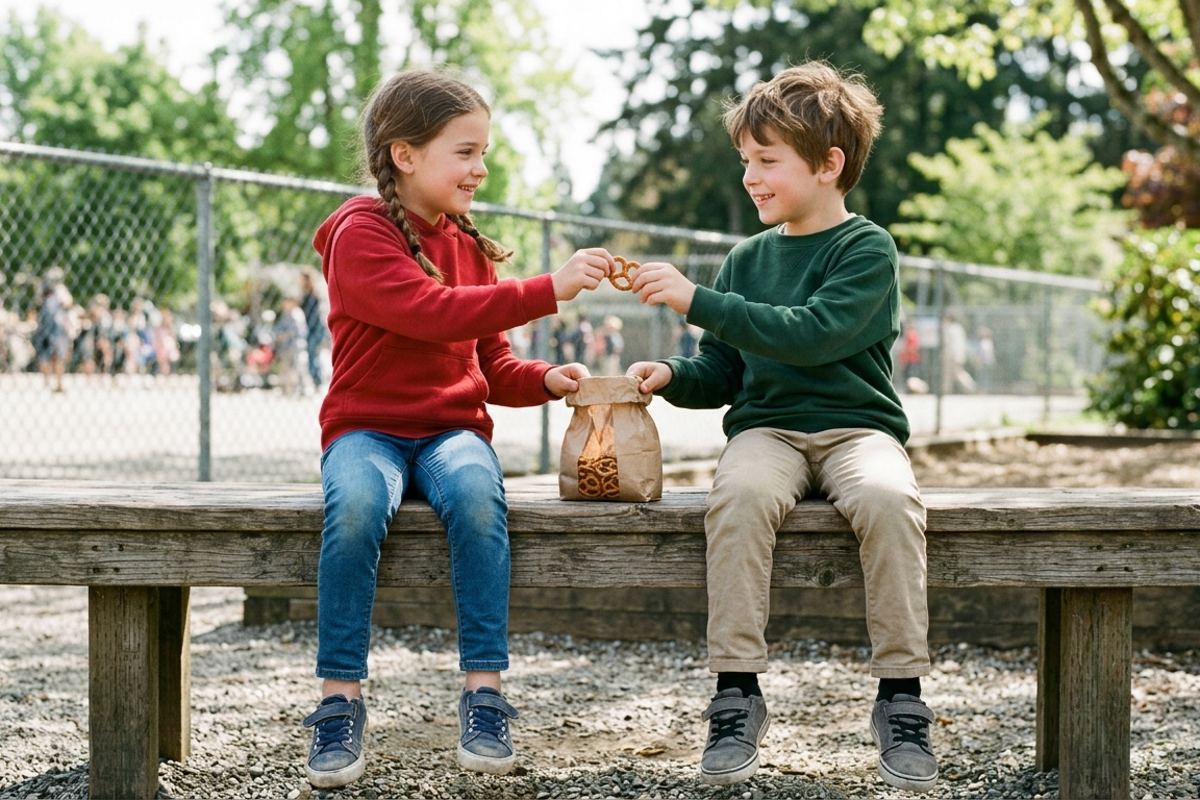
Rehearse the small stuff at home
For shy kids the first sentence is the expensive part. Once they're in the game or holding the jump rope handle, they manage. It's the doorway moment that costs so much. That's why rehearsal helps. Not a serious lecture at the kitchen table, more a tiny practice round while packing lunch.
Give them a few plain scripts: "Can I sit here?" "Do you want to play?" "What are you drawing?" "I like your backpack." Keep the words short. A shy 1st grader is not going to stroll up and say "I was wondering if I might join your activity." Honestly, neither would most adults.
For younger kids, stuffed animals make it easier. The bear asks "can I play blocks?" The dinosaur says "no, we already started," because sometimes that happens. Then the bear practices "okay, maybe next time" and finds another toy. That's not pessimism. It's a plan for the awkward version, which makes the real moment less scary.
Older elementary kids will eye-roll at role-play. Fine, do it sideways: "If you wanted to sit near Sam at lunch, what would sound normal? 'Move, I'm sitting here' seems bold." Let them correct you. Kids love correcting us. Use that. And practice greetings in low-stakes places: hi to the crossing guard, ordering their own bagel, thanking the librarian. Same muscle, no classmate judging every syllable.
Work the edges of the school day
The busiest moments of school are hardest for shy kids. Walking into a full, loud classroom after everyone has settled feels like stepping onto a stage. Recess games are already in motion. Lunch seating rules feel mysterious even when adults think they're obvious. The edges of the day give you better odds.
If your school allows it, arrive a little early. An almost-empty room is easier to enter than one buzzing with twenty backpacks and somebody yelling about Pokemon, and your child gets to greet kids one at a time as they trickle in.
One-on-one playdates help too. Keep the first one short, an hour or so, with a little structure: sidewalk chalk, a board game, muffins from a box mix. If conversation stalls, the muffins still need stirring. Shared activities beat "go play" every time for a quieter child. Even a simple two-player game like tic-tac-toe works side by side with a classmate or cousin, because plenty of kids talk more easily while their hands are busy.
Clubs and small groups are a sweet spot. Art club, chess, chorus, running club, library helpers. Interest does some of the talking; a child who freezes at "find someone to play with" often does fine when the job is "paint this backdrop" or "test this bridge." One group is plenty. The aim is repeated contact with the same kids in a setting where your child knows what to do, not a calendar built for a tiny CEO.
What to ask the teacher for (and what not to)
Teachers can't manufacture friendship on command, but they can make the classroom easier to enter. A short, calm message beats a long worried one sent at midnight, though we have all met Midnight Parent Brain. Something like: "My child is slow to warm up and is having a hard time finding someone at recess. Could you keep an eye out for one kind classmate who might make a good lunch or partner buddy? He does better with a heads-up before speaking in front of the group."
Helpful asks: a lunch buddy, a steady partner for the first weeks, or a classroom job that creates natural contact. Passing out papers, feeding the class fish, collecting library books. A job gives a shy kid a reason to interact that is not "go be social." Also useful: asking the teacher to warn your child before calling on them. "I'm going to ask you number three in a minute" can be the difference between silence and a brave answer.
What backfires is asking the teacher to push public participation. Surprise spotlight moments make shy kids shrink; "tell the whole class about your weekend!" is kindly meant and feels like being launched from a cannon. Better: quiet invitations, predictable roles, chances to join without everyone watching.
If the shyness comes with stomachaches, daily tears, sleep trouble, or your child starts refusing school outright, raise it with the teacher and your pediatrician. Not with panic. With the same steady attention you'd give a cough that isn't going away.


