

Sunday, a little after six. The bath is running, the backpack is still in a heap by the door, and your child suddenly has a stomachache that was nowhere to be found during pancakes, Legos or the backyard mud project. By pajama time they're extra clingy and whispering the question you knew was coming: "Do I have to go to school tomorrow?"
What Sunday-night worry usually looks like
Sunday worry wears a costume. In my kindergarten and 1st grade classrooms I saw it arrive on Monday mornings as tummy aches, tears over pajamas that were "too scratchy" last night, and one memorable complaint that the bus was "too bus-y." Which was a complaint and honestly pretty good wordplay.
At home it looks like a kid who was fine all weekend and wilts around dinner. They ask the same question five times: "Is tomorrow a school day?" They need one more hug, one more drink, one more urgent meeting about a stuffed animal's blanket situation. Some kids just say it: "I don't want to go."
It's most common somewhere in the K–4 range, but older kids get Sunday feelings too. Little kids feel a transition in their bodies before they can put words on it. The weekend has a shape: slow breakfast, different clothes, nobody saying "shoes on" with that particular school-morning edge. Then Sunday evening comes, the structure drops away, and the unknown week fills the space.
A child who likes school can still feel this. A classroom can be warm and friendly and also be a lot. Bells, line spots, reading groups, recess politics, and the open question of whether the fire drill will happen during art.
Normal worry vs. worth a conversation
Some Sunday worry is normal, in the same way plenty of adults get a small Monday cloud while staring at the laundry basket. The feeling is real. It also passes.
The normal version fades once the day gets going. Your child is teary at bedtime or clingy at drop-off, and by Monday lunchtime they're eating their sandwich and trading strong opinions about crayons. They still go. They still have good days. It tends to flare after a vacation, a long weekend or a week of being sick, any stretch where the routine got wobbly.
It's worth a closer look when you see a pattern like this:
- the Sunday dread shows up every single week for about a month
- your child refuses school, or can't get through the morning routine
- headaches or stomachaches keep coming back with no other clear cause
- your child names one specific dread: a kid, a test, a lunch table, the bathroom, the bus
You don't have to solve the whole mystery at 8:43 p.m. with wet hair and one sock missing. Mention it to the teacher. If the physical complaints keep coming, bring it up with the pediatrician too, not in a panic, just as information. If you're finding it hard to tell where a real sick day ends and dread begins, sick day or school avoidance walks through that fuzzy line.
Parents used to apologize for emailing me about "probably nothing." I never minded. A small note from home let me watch a child with better eyes.
A Sunday evening that lowers the temperature
The goal is not to make your child love Monday. That's a big ask. The goal is to lower the temperature in the house so worry has fewer loose threads to tug on.
Do the Monday prep earlier than feels necessary. Backpack by the door at 4, not at 8. Lunch plan made before dinner. Library book found before teeth. Worry loves an unpacked backpack; it can turn one missing folder into a full courtroom drama. If your child resists packing, shrink it: "You put the folder in. I'll zip."
Then ask one narrow question instead of the big heavy one. "What are you worried about?" is like opening a closet and having everything fall out. Try: "Tell me the one thing that feels hard about tomorrow." One thing. Not a speech. "I don't know" counts as an answer. "Okay. If it pops up, you can tell me." Then move on to something steady.
A fixed Sunday ritual helps more than a fancy one. Pancakes for dinner. A ten-minute walk around the block. Laying out clothes together while the dryer thumps in the background. Reading the same gentle picture book for a few Sundays in a row (I always reach for Wemberly Worried, because Wemberly can worry about a crack in the living room wall and somehow make every anxious kid feel seen). The ritual itself isn't magic. Predictability is the point.
And keep bedtime boring and the same. Same order, same number of books, same lights-out. Sunday night is not the night for a new sticker chart, a deep emotional summit or "just one more episode." I say this with love and with the tired authority of someone who has watched one more episode turn into a Monday-morning shoe crisis.
What to say (and not say) when it shows up
"There's nothing to worry about" comes from a loving place. It also bounces right off a worried child. To them there is something. Their stomach says so.
Try naming the feeling without feeding it: "That sounds like a Monday feeling. I get those too." Then the next small step: "Pajamas, then book." That does two jobs at once. It tells your child they're not strange, and it keeps the evening moving.
Short and matter-of-fact beats a pep talk. A six-minute pep talk accidentally tells a kid, "Wow, this must be a very big problem if my grown-up is using the serious voice." A few lines that tend to land:
- "You can feel nervous and still go."
- "Your teacher knows how to help kids start the day."
- "Backpack's packed. Morning-you will be glad."
- "Let's write that down so your brain doesn't have to hold it all night."
That last one matters. Don't interrogate at bedtime; after lights-out even small questions turn to fog. If a worry surfaces then, park it on a sticky note for tomorrow. "Lunch table." "Spelling test." "Ask about the bus line." Stick it on the door. You're not ignoring the worry, you're giving it an appointment.
Some kids will tell you more while scribbling a dragon with seventeen teeth than they ever will in a face-to-face talk. That counts. So does the odd, sideways stuff that comes out in the car, which is why the questions that get real answers about school rarely sound like questions.
What to tell the teacher, and how
A two-line email on Monday morning is enough. Truly. Teachers do not need a case file before attendance. Something like: "Sunday nights have been rough for the past three weeks. Stomachaches, lots of 'do I have to go.' We've tried packing earlier and a calm bedtime. Could you keep an eye on the start of the day?"
That gives the teacher the three useful pieces: what you notice, when it started, what you've tried. If there's a specific fear, say it plainly. "She's worried about who to sit with at lunch." "He says the morning worksheet feels too hard."
Teachers can do small things that are invisible from home. Watch the first twenty minutes. Move a seat. Pair your child with a steady classmate at arrival. Check in at recess. Let a kid be first to hang up their backpack so the cubby crowd doesn't feel like a tiny airport security line.
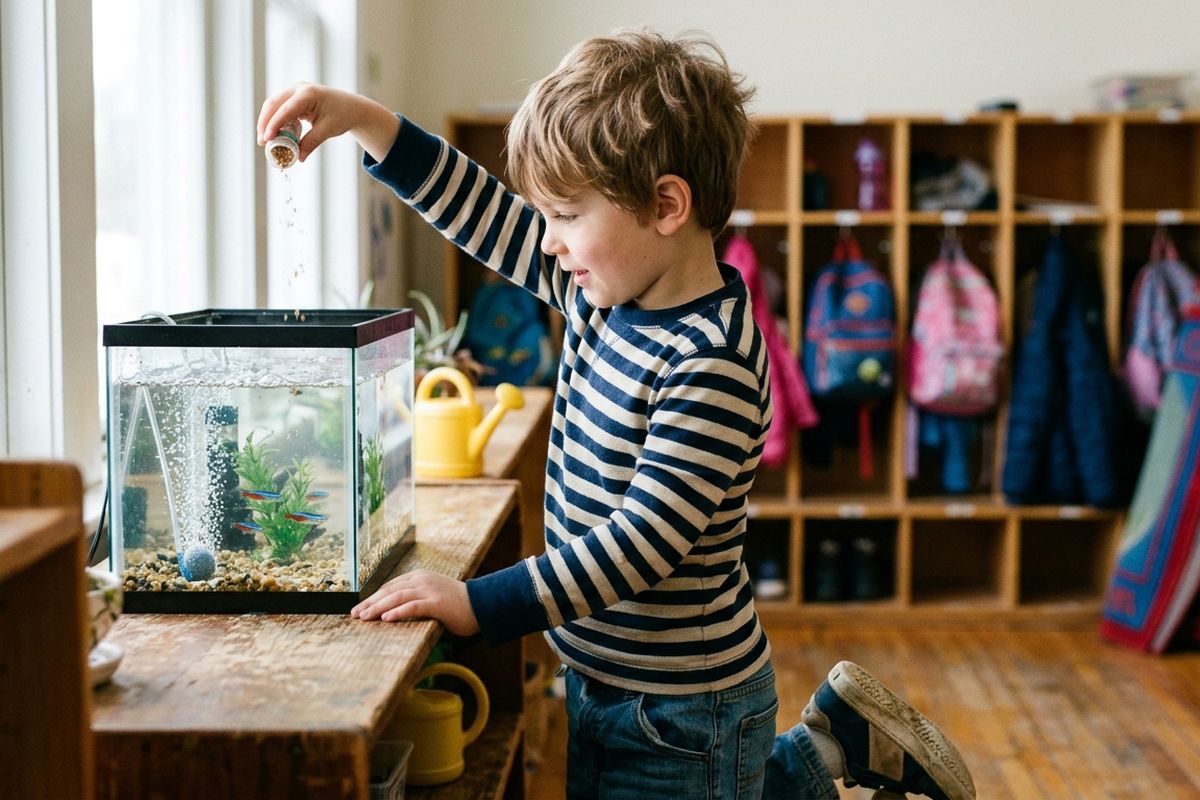
I had a student one year who struggled hard on Mondays. The first ten minutes were the mountain; once they were in the room and settled, the day usually went fine. So we gave them a Monday job: feed the class fish and put the attendance folder by the door. Nothing sparkly, no announcement. Just a job that said, "You belong here, and the room needs you." It helped. The fish were deeply unimpressed, which may have been part of the charm.
If you don't hear back right away, assume a glue spill, a missing mitten and twenty-four children who all need to tell one story at once. A short follow-up after a week is fair. And if the note turns into a real conversation, talking to the teacher about a problem covers how to keep that on the same side of the table.


