

You glance in the rearview mirror at a red light and your kindergartner is out cold, head tipped against the booster seat, jacket half off, three blocks from home. Last year, half-day pickup meant lunch together and a full afternoon of energy. Full-day school looks like a simple schedule change on paper. In real life it's a whole-body adjustment.
Why full-day hits harder than it looks
Half-day school usually ends before a child has used up their good manners, attention, and flexible thinking. Full-day school asks them to keep going: through lunch, recess, bathroom lines, specials, cleanup, dismissal, and the mysterious classroom moment when everyone must sit on the rug but nobody can find their carpet spot.
For kindergartners (usually ages 5 to 6), that's a lot. For preschoolers moving into a full-day Pre-K program, it can feel even bigger. Kids who love school still come home looking like they fought a small weather system.
What makes it sneaky is that most of the hard work is invisible. Your child is learning the teacher's routines, figuring out when to raise a hand, how to share crayons with the kid who peels all the wrappers off, and how to hold it together when they miss you.
So if the first few weeks feel bumpier than expected, it doesn't mean your child wasn't ready. It means full-day school is full. Most kids need time, food, sleep, and a softer landing at home before they look like themselves again.
The first two weeks: expect the crash
Teachers see this pattern every fall. A child holds it together beautifully at school, follows directions, smiles in line, maybe earns a sticker. Then they get in the car and melt into the floor mat because the granola bar is the wrong kind.
Home is safe. That's why the crash happens there. There's a name for it, and it's oddly reassuring: after-school restraint collapse, and it's closer to a compliment than a problem.
Some kids crash loudly, with tears or snapping. Some go silent and stare out the window. Some get extra clingy at bedtime, or suddenly forget how to put on pajamas despite having built a block tower with architectural ambition at school that morning.
Try not to ask for a full report the second you see them. "How was your day?" is a big question for a tired child. You'll get "fine," "bad," or a noise like a mailbox closing. A gentler script: "I'm glad to see you. Snack's in the kitchen. You can tell me one thing now, or later." Food and quiet bring the words back. The real story tends to surface at bath time, or three minutes after lights out.
Lunch is the real curriculum change
The jump to full-day school isn't just more classroom time. It's lunch.
Lunch is its own subject, and nobody puts it on the report card. Your child has to open containers, stay seated, eat inside a wall of noise, track their water bottle, and finish before the line moves. Buying lunch adds choices, trays, and the emotional weight of discovering the chocolate milk is gone. That is a lot of executive function wrapped around a sandwich.
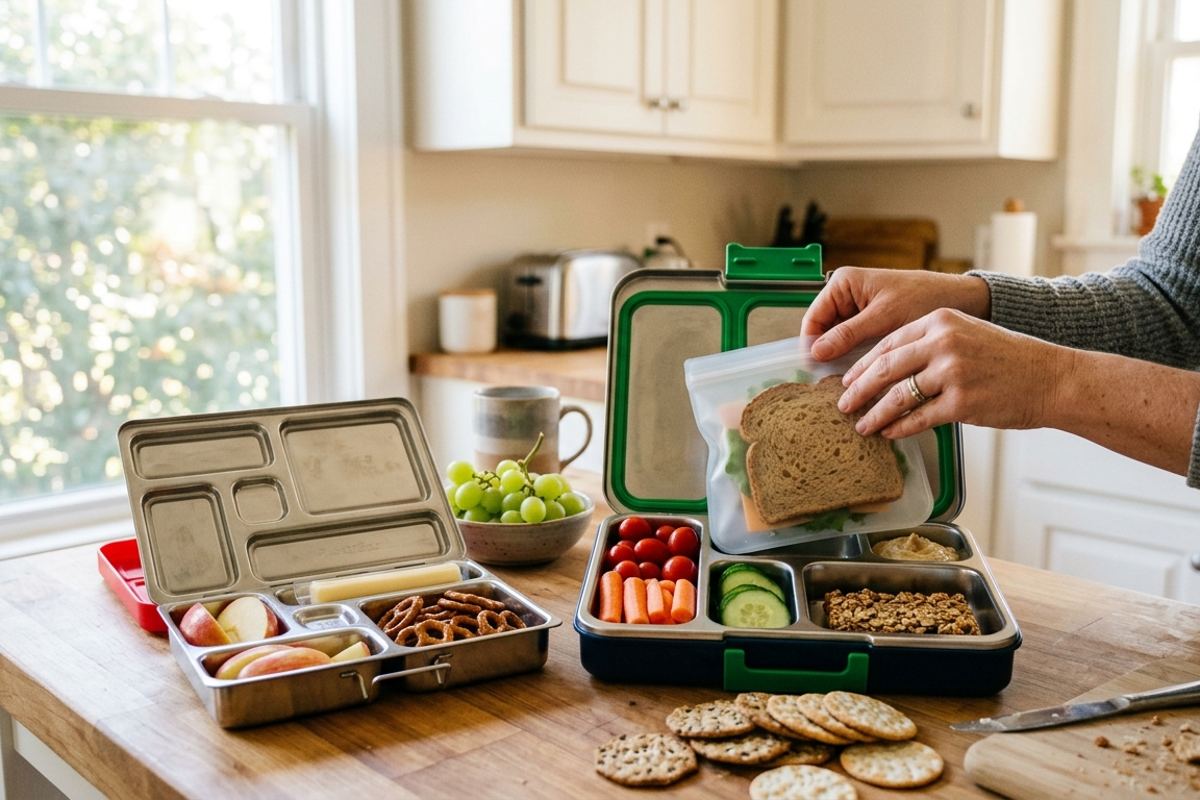
Practice at home. Pack the actual lunchbox on a Saturday and let your child open everything without help. Can they pop the yogurt? Peel the orange? Get the straw into the pouch without launching juice across the table? Better to discover the impossible thermos in your kitchen than at a cafeteria table with 40 kids humming like bees.
Keep the food boring at first. This is not the week to debut quinoa bites shaped like stars. Familiar wins: half a sandwich, crackers, cheese, fruit. If your child eats very little at school, send a bigger after-school snack and ask the teacher what they notice. Some kids are too distracted to eat much until the cafeteria feels normal.
Also, label everything. Water bottles join other families. A lone spoon can vanish into the school universe forever.
Rebuild the afternoon around less
The biggest gift you can give your child during this transition is a smaller afternoon.
It may be temporary. It may be inconvenient. But after a full day of lining up, listening, sharing, and waiting, your child doesn't have much left for errands, lessons, playdates, and cheerful handwriting practice at the kitchen table.
For the first month, think: snack, connection, low demands, early bedtime. A cheese stick in the car. Ten minutes of quiet building with blocks. A short walk where nobody gets quizzed on sight words. A bath before dinner, because your child turns into a pumpkin at 6:12. If screens are part of your house rhythm, pick something short and predictable instead of the kind of show that ends in negotiations worthy of Congress.
Some kids decompress best with their hands busy. A simple maze or a coloring sheet works for those kids. If yours treats a worksheet like it personally insulted them, skip it. The goal is recovery, not enrichment theater.
Tired kids also do better with one direction at a time. Instead of reminders from across the room: walk over. "Backpack on the hook." Pause. "Wash hands." Pause. The next step, not the whole evening.
When the tiredness doesn't fade
Most kids even out after two or three weeks. Not perfectly. You'll still see Friday floppiness and Monday grumbling, but the crashes get shorter, lunch comes home less untouched, and mornings stop feeling like a tiny courtroom drama.
If your child is still deeply wiped out after three or four weeks, look closer. Start with the boring basics: bedtime, wake-up time, food, water, and the length of the day including the ride. A kid on the bus 45 minutes each way lives a different schedule than a kid who walks two blocks. Full-day schoolers often need an earlier bedtime than anyone expects; there's a rundown of how much sleep school-age kids actually need if you're not sure where to aim.
Then ask the teacher specific questions. Specific beats "how are they doing?" every time. Are they eating any lunch? Do they fade at a certain time of day? Do they play at recess or mostly watch? Are they comfortable using the school bathroom? You're not asking the teacher to fix everything by Friday. You're gathering clues.
A few signs deserve extra attention: daily stomachaches, falling asleep at school, panic-level crying at drop-off that never softens, or a child who seems sad and unlike themselves most days. Mention those to the teacher, and if they continue, to your pediatrician. No scary conclusions needed. Just don't sit alone with worry when people who see children all day can help you sort normal-tired from needs-support.
Often the fix is small. A quieter lunch spot. Velcro shoes instead of laces for now. A protein snack in the backpack. Bedtime moved 20 minutes earlier, even if the dishes are still giving you the look from the sink. And if soccer, piano, and library club all started the same week as full-day school, pause one if you can. Your child already took on a major new job. Home can be the place where they do less, complain about the broken banana, and slowly grow the stamina the school day asks for.


