

The first week of school has a certain sparkle. The pencils are sharp, the lunchbox still has both zipper pulls, and somebody has written "brush teeth" on a chart with a scented marker. Then October shows up with a missing sneaker, a permission slip under the couch, and a child eating dry cereal in the car.
Why the shiny new routine dies by October
Back-to-school routines usually fail because they're too big for real life. Not because you're lazy, and not because your child is stubborn beyond all reason, though they may be giving a strong performance at 7:18 a.m.
The September version often looks like this: wake at 6:00, make the bed, get dressed, brush teeth, pack lunch, check the folder, feed the pet, practice spelling words, eat a balanced breakfast, leave smiling. That's eleven chances for things to go sideways before school even begins.
Teachers learn fast that a classroom routine has to survive noise, moods, substitutes, indoor recess, and the kid who dropped a glue stick into the heating vent. Home routines need the same durability. A good routine is not the fanciest plan. It's the smallest plan that still carries the day.
If your September system is already wobbling, don't throw it out. Shrink it. Pick the two or three points where your family gets stuck most, which for many families means backpacks, shoes, and actually leaving the house. Fix those first. The color-coded calendar can wait until nobody is crying about socks.
Move the morning to the night before
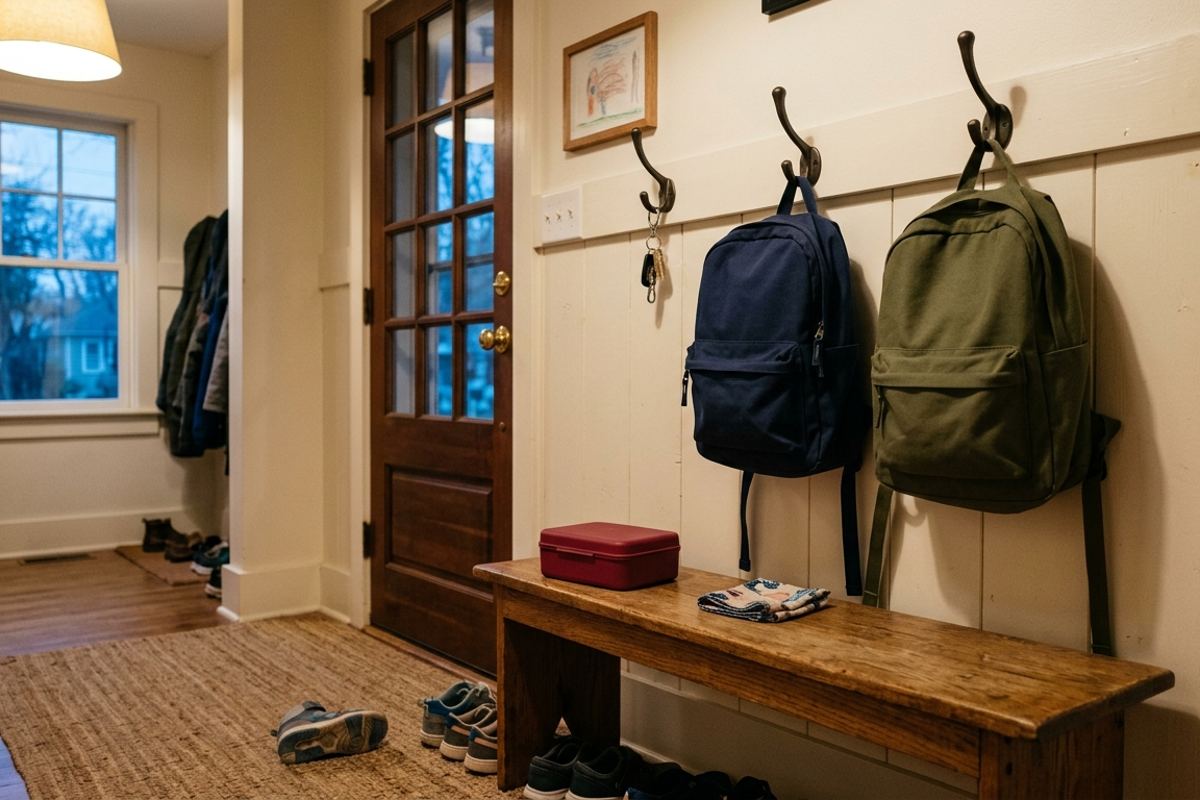
The best morning routine starts when nobody is trying to find a library book with toothpaste on their shirt. Evening brains are calmer, at least compared with the last seven minutes before the bus. You don't need a family meeting. You need a five-minute sweep, same time most nights, same boring little pattern:
- Backpack packed and zipped
- Clothes out, including socks
- Lunch boxed, or at least planned
- Shoes by the door
- Folder checked for the one paper that says "return tomorrow"
That's it. The goal is not a perfect evening. The goal is removing the three worst morning fights before they happen.
A kindergartner or 1st grader needs you right beside them for this. By 3rd or 4th grade, many kids handle most of the sweep with a quick check, though they'll still need the reminder, because being ten does not magically make a person care where their left shoe is. One teacher trick: use the same phrase every night. "Backpack, clothes, lunch, shoes." Say it like a little chant while everyone wanders around collecting things. It feels almost too simple, which is why it works.
Mornings: cut decisions, don't add time
When mornings are rough, the first idea is usually "we should wake up earlier." That helps for about a week. Then bedtime drifts later, the earlier alarm becomes background noise, and everyone is still hunting a hoodie at the last second. Chaotic mornings rarely need more time. They need fewer decisions.
Kids burn surprising energy on tiny choices. Which cereal? Which shirt? Can I bring this rock to school? Is today library day? By the time you say "shoes, please," their brain has spent half its morning fuel on waffles versus toast.
So make the morning almost boring on purpose. Same breakfast rotation, same launch spot by the door, same order: bathroom, clothes, breakfast, teeth, shoes, backpack. One clock your child can actually see, in the room where the morning happens. A clock in your bedroom does not help the child standing in the kitchen wearing one sock.
Breakfast should be reliable, not Pinterest. Cereal and a banana. Yogurt and granola. Eggs on the days you have patience for pans. And if there are quiet minutes left over, screens come after shoes and backpack, never before. Screens before shoes are how time disappears into a couch cushion.
The after-school landing
Many kids come through the door carrying the whole day in their bodies. They held it together for the teacher, waited their turn, survived the lunchroom, and maybe did math while someone nearby hummed for forty minutes. Then they get home and fall apart, because home is safe.
This is why "start your homework right away" backfires. Most elementary kids do better with a landing first: ten minutes of food, water, and no questions that require a paragraph answer. Snack first, then start. That rhythm beats a rule about clock time, because "homework starts at 4:00" collapses the day pickup runs late or soccer moves. "Snack, then backpack" travels better. If homework itself is the nightly battlefield, there are ways to take the fight out of homework that don't involve anyone standing over the table.
During the landing, keep questions tiny. "Apples or crackers?" instead of "how was your day?" The big stories come later, when you're stirring pasta and your child suddenly mentions that Ava moved seats, the fire drill was too loud, and they need a shoebox by Friday.
Let the weekend be different on purpose
A routine with no edges eventually snaps. Families need weekends to feel different, and kids do too. The trick is choosing which parts stay anchored and which get to breathe. If Saturday is a total free-for-all, Monday feels like reentering the atmosphere. If Saturday looks exactly like Tuesday, everyone gets cranky and nobody knows why.
Keep two anchors. First, bedtime-ish. Not the same minute as a school night, just within about an hour of it most weekends, so Sunday night isn't a disaster. Elementary kids run on more sleep than most families schedule for, and the numbers on how much sleep they need surprise most parents. Some kids shrug off a shifted bedtime; others fall apart Monday at 2 p.m. You already know which kind lives in your house.
Second, one Sunday reset moment, ten or fifteen minutes at a natural pause: empty the backpack completely, check the school calendar, restock lunch snacks, find both shoes. Monday shoes enjoy hiding. If your child likes paper-and-pencil downtime, a maze book or a stack of blank paper keeps them nearby and busy while you sort folders.
Let the rest of the weekend breathe. Pancakes at 10:00, pajamas too long, a movie on the floor with popcorn in places popcorn should not be. The routine survives because it has a frame, not because every hour is managed. Sunday night, do the small reset, set the shoes by the door, and hand Monday morning one less thing to fight about.


