

The math facts usually arrive home in a very official-looking way: a timed sheet, a note about "fluency," or a child sighing over 8 + 7 like it has personally wronged them. Parents tend to reach for one of three tools: an app, flashcards, or whatever math can be squeezed out of dinner and errands. The real answer is not picking the one perfect method. It is knowing what each one is actually good for.
What "knowing the facts" actually means
When teachers say a child should know their facts, they mean more than blurting out answers fast. Speed is part of it. If a 4th grader has to stop and count up 6 × 7 every single time, long division gets heavy in a hurry. But real math fact fluency also means flexibility.
A fluent kid can think, "I don't remember 8 × 6, but I know 4 × 6 is 24, so double it: 48." Or, "9 + 6 is like 10 + 6 minus 1." That is fast enough to be useful and flexible enough to survive outside a worksheet.
Teachers care because facts take up mental space. When a child is working through a word problem or learning fractions, they need their brain available for the new idea. If every small fact becomes a side quest, the main lesson gets lost. Most schools build addition and subtraction facts in the early grades, then multiplication and division around 3rd and 4th grade.
What apps and games do well
Screens get a bad rap in homework conversations, and sometimes they earn it. But math games have a real lane: lots of quick reps without turning your kitchen table into a negotiation arena. A good game gives instant feedback, keeps the pace moving, and lets your child try again without an adult hovering with a pencil.
That matters, because repetition is how facts get smoother, and many kids will do far more reps in a game than on a worksheet. They might groan through ten flashcards but happily answer fifty facts while a well-built math app keeps score. Brains are funny that way.
The limit is transfer. Tapping the right answer on a screen is not always the same as using that fact in a notebook, at the store, or out loud. Some kids get very good at the game pattern. They work from the answer choices instead of truly knowing the fact. So use screens for practice, not proof. If your child can answer in the game but freezes on paper, they are not being difficult. The fact learned in one setting still needs help traveling to another.
What flashcards still do well
Flashcards are not fancy. They do not cheer, sparkle, or let anyone pick a unicorn avatar. But they do one thing beautifully: they target the exact facts that wobble.
The giant deck is where flashcards go wrong. If your child already knows 2 + 3 and 5 × 1, slogging through those cards every night adds boredom, not fluency. The magic is in the tiny deck. Pull out the five facts that keep causing trouble. Not thirty. Five.
Then keep it short. Show a card, give about three seconds of thinking time. Known? Great, move on. Not known? Say the answer plus a strategy: "7 + 8 is 15. Think 7 + 7 is 14, then one more." Put that card back in the pile. Three minutes at breakfast beats a 35-minute Sunday session that ends with everyone needing a snack and a personality reset.
Flashcards also let you hear how your child thinks. Are they counting from one? Counting on? Using doubles? Guessing wildly while watching your eyebrows? That little bit of information tells you what to work on next.
Where the grocery store wins
The store is where math stops wearing a worksheet costume. Four yogurts at $2 each. A sale sign that says "2 for $6." A child deciding whether their allowance covers gum and the suspiciously expensive drink near checkout.
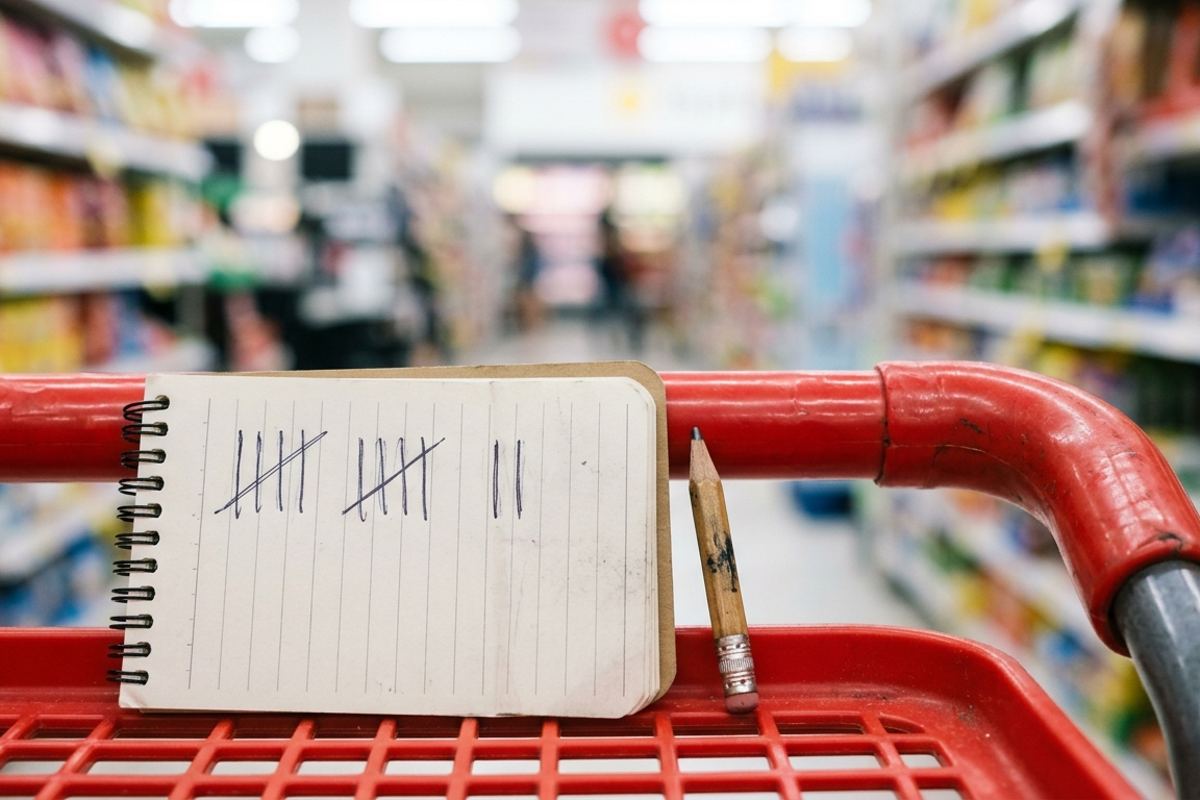
This is where transfer grows. Your child sees that 4 × 2 is not just an answer on a screen. It means the yogurts cost $8. Doubling a recipe is not a "multiplication situation." It is the difference between enough pancakes and a household complaint.
Real-life math sticks because it has a reason attached. Kids remember the fact that got them more cookies, or proved that a sibling did not, in fact, receive a larger slice of pizza. Justice is a strong motivator.
You do not need to narrate the entire produce section like a math documentary. One small question per errand is enough: "Each granola bar box has 6 bars and we buy 3 boxes. How many bars?" If your child shrugs, model it and move on. There are plenty more ideas for everyday math in groceries and cooking that take zero prep.
The rotation that actually works
The best plan is small, mixed practice. A little screen time for reps. A little flashcard time for weak spots. A little real-life math so the facts grow legs and walk around.
Five to ten minutes a day beats a Sunday marathon. Long sessions teach kids that math facts are something to endure. Short ones teach the brain, "Oh, we use these all the time."
A realistic week: Monday, five minutes of a game after snack. Tuesday, three minutes of flashcards before school. Wednesday, nothing formal, but your child figures out the cost of two $3 notebooks at the store. Thursday, a quick game. Friday, the tiny flashcard pile again. Saturday, double the muffin recipe.
Keep the goal narrow, too. "We are working on the 6s this week" has a handle. "We need to learn multiplication" is a mountain wearing a backpack. If your child is starting the times tables, there is an order for learning them that makes the whole job smaller.
And if your child is tired, hungry, or already fried from homework, facts can wait until tomorrow. The brain melting over 9 + 7 at 8:15 p.m. is not building fluency. It is building feelings.
How you know it's working
Math fact growth is quieter than we want it to be. There is no dramatic morning where your child announces full mastery of the 7s. You notice small things instead.
The finger-counting pause gets shorter, then disappears for some facts. Your child stops staring at 8 + 5 like it is written in ancient code. They say "13" and keep going.
Even better, they start using known facts to reach nearby ones. "I know 6 + 6 is 12, so 6 + 7 is 13." "10 × 4 is 40, so 9 × 4 is 36." That flexible thinking is gold. It means the facts are connecting instead of floating around as separate trivia bits.
You may also see less panic: a child who used to shut down at a full page of problems starts with the ones they know and works around the harder ones. That is confidence in a very practical pair of sneakers.
If months of steady, calm practice are not moving the needle at all, ask the teacher what they see at school. Bring specifics: "They can do facts in the app but not on paper," or "They still count every addition fact from one." That gives the teacher something to work with, and keeps the conversation about support instead of blame.


