

A math worksheet slides out of the folder half-crumpled, and your child suddenly needs water, a snack, and possibly a new identity. Later, the same child will happily tap through math facts on a screen for 15 minutes and call it "not homework." So which is better, games or worksheets? The honest teacher answer: it depends what you need the practice to do.
They're tools, not rivals
The real question is never games or worksheets. It's which job needs doing tonight: learning a new idea, building speed, or showing work.
A worksheet is a notebook page with a spotlight on it. It slows things down and asks, can your child do this skill without the music, the timer, and the cartoon frog cheering? That's genuinely useful to know.
A game is math practice in sneakers. It moves your child through lots of problems before they have time to announce that math is the worst thing ever invented. Also useful.
Neither is magic. A game can be silly fluff with numbers sprinkled in. A worksheet can be a perfectly good page assigned at the worst possible time, like 7:48 p.m. after soccer practice and a dinner your child mainly sniffed. Think of them like shoes: sneakers, snow boots, and flip-flops all have a job. Trouble starts when you ask flip-flops to handle a blizzard.
What worksheets do well
Worksheets are quiet, self-paced, and familiar. They look like school, and that alone matters, because most tests still ask kids to sit, read directions, solve, and show what they did without a hint button.
A worksheet also leaves a paper trail. As a teacher, I love a page of neat mistakes more than a page of mystery. If a child misses eight subtraction problems, I can usually see why. Forgot to regroup? Lined the digits up crookedly? Mixed up the sign because the page had addition and subtraction together?
That trail helps you too. Don't grade like a teacher with a red pen. Just look for the pattern. One wrong answer is a slip. Six wrong answers of the same kind are a message.
Worksheets earn their keep for showing steps in multi-step problems, practicing test-style directions, and slowing down a kid who needs to explain their thinking. If you want pencil-and-paper practice, a dollar-store workbook or a page of problems your child writes for you is plenty to start with.
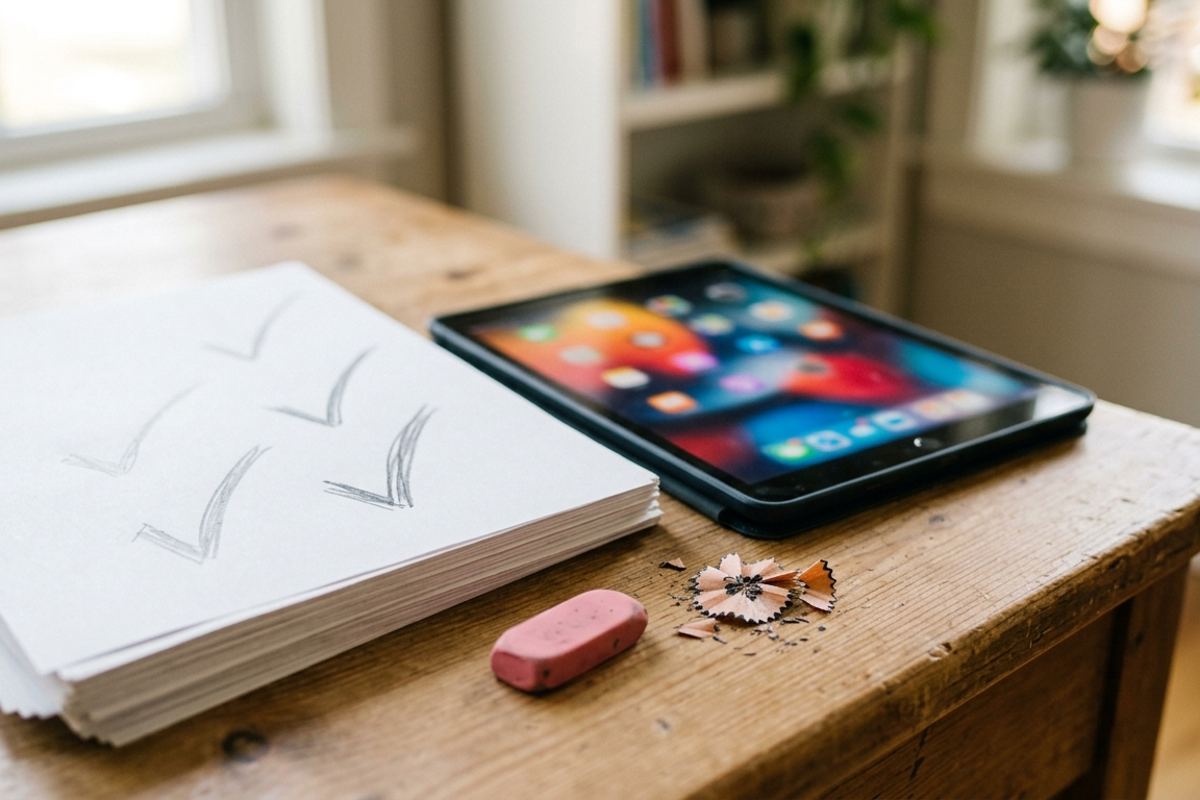
What games do well
Games are excellent at volume without dread. A child who groans at 20 facts on paper will answer 50 in a game and ask for one more round. Teachers notice that. Parents really notice that.
Games also give instant feedback. Your child knows right away that 6 × 7 was not, in fact, 48. No red pen waiting at the end of the page, no big X sitting there like it owns the place. Many kids will try again happily when the correction feels like part of the game instead of a personal announcement.
The third strength is repetition. Math facts, counting patterns, coin values, and fractions on a number line all need repeated exposure. Not forever, and not as punishment. Just enough that the brain stops spending all its energy on "what is 8 + 5?" and has room left for the bigger problem.
A game also fits into real gaps: the 12 minutes before dinner, a sibling's piano lesson. For fact fluency, a fast-paced app with a timer is a much easier sell than another page of problems, and the practice still lands.
Match the tool to the job
New concept? Usually neither, at least not first. That's a human's job. If your child doesn't understand why borrowing works, a worksheet lets them practice being confused, and a game hides the confusion under points and cheerful noises. New ideas need talking, objects, drawing, and mistakes that get fixed in the moment. For a 2nd grader learning regrouping, grab pennies and dimes and let them trade. Let them say "wait, why?" That's the good part.
Once the idea makes sense, choose the tool. Fluency and speed: games usually win. Test prep and showing steps: worksheets usually win, because kids need practice reading directions, lining up numbers, and showing enough work that a teacher can follow it.
Across a week, mix them. Monday is five careful problems on paper, Tuesday is ten minutes of a game, Wednesday is nothing because everyone is tired and the dog threw up, Thursday is a short paper check. Real life counts in the schedule. Board games slot in here too; the ones that quietly teach math cover the same skills with dice and family drama instead of a screen.
The kid factor
Some kids need fewer worksheets, not more. The perfectionist sees a marked-wrong answer and crumbles. They erase until the paper gets furry and ask "is this right?" after every problem. For that child, games lower the temperature. The screen says try again, and somehow it feels less like being judged. They still need paper practice, but in tiny doses: three problems together, two alone, praise for the fix rather than the perfect page.
Other kids are speed demons. They blast through a worksheet like they're being chased. Directions are decorative, and the answer to every word problem is 12, including the one about inches of ribbon. For those kids, paper can be the better workout, because the goal isn't more speed. It's control. Ask for fewer problems done neatly, with one sentence explaining how they knew.
Games can feed the racing habit, so for a fast kid, sometimes pick slower strategy games instead. Number logic and planning puzzles teach that thinking is allowed to take more than four seconds. Logic puzzles, kids' sudoku and pattern games are good hunting grounds for exactly that.
Making screen math games earn their spot
A good math game makes the math part of the gameplay, not a toll gate. If your child answers one addition problem and then spends three minutes dressing a penguin, that's a penguin game with occasional math interruptions. Fine for fun. Not really practice.
In a stronger game, the player needs the math to move forward: solve to jump, compare numbers to pick a path, use facts to race. The thinking is baked in.
A few quick checks: Does your child answer lots of problems in a short session? Do wrong answers get corrected right away? Is the level right, not babyish and not impossible? Can they play without ads, chat, or account sign-ups?
Short sessions are enough. Ten focused minutes of fact practice is plenty for an elementary kid after a full school day, and stopping while it's still going well is a skill worth having as a parent. One more trick: ask your child to teach you the game for a round. You'll learn fast whether they're doing math, guessing, or pressing buttons until confetti happens. Then you can decide if that game earned tomorrow's ten minutes.


