

The backpack has been sitting by the door since June, still holding one dried-out marker and a permission slip you meant to sign three months ago. Then August shows up, and suddenly your child looks at a simple math problem like it was written in ancient code. That rusty feeling is what people mean by “summer slide,” and yes, it is real. It is also usually less dramatic than the internet makes it sound.
What actually fades over summer (and what doesn’t)
The summer slide is mostly about skills that need regular practice to stay quick: reading fluency, math facts, handwriting stamina, and the school muscles of starting a task and finishing it without wandering off to inspect the dog.
For many kids the knowledge is still there. It is just under a layer of popsicles and late bedtimes. A 2nd grader may still understand that 8 + 7 means putting groups together, but not remember the answer fast. A 4th grader can still read a chapter book, but the first week back they read slowly and complain the book is “too long,” which usually means “my stamina is gone.”
What does not vanish? Curiosity. Vocabulary from real life. A kid who spent the summer helping cook, catching bugs, and asking 400 questions about sharks has been learning the whole time.
School plans for rust, too. Most teachers expect the first weeks to be review, routines, and “oh right, we raise our hand before telling a story about Grandpa’s lawn mower.” The slide matters most when a child goes many weeks with almost no reading, counting, or problem-solving. For a kid with books, conversation, chores, and some ordinary family life, summer is a pause, not a disaster.
Twenty minutes of reading does most of the work
If you only do one school-ish thing over summer, make it reading. Not worksheets about reading. Actual reading.
Twenty minutes a day is plenty for most elementary kids: your child reading to you, you reading to them, an audiobook in the car, a graphic novel read upside down on the couch. The goal is to keep words familiar and books normal.
For early readers, short and often beats long and miserable. A 1st grader might read the same easy book three nights in a row. That is not cheating. Re-reading builds fluency, and fluency is what lets a child stop sounding like a robot with low batteries.
For older kids, choice matters more than level. Summer is made for series books, joke books, Minecraft guides, and that giant book about snakes you wish they would stop bringing to restaurants. If your child avoids reading altogether, pair print with audio, and skip the pop quizzes. Ask normal questions: “Which part was weird?” “Did the dog survive?” For more ideas by age and stage, browse the Reading & Writing section when you have five quiet minutes and half a cup of coffee.
Math: keep the facts warm, skip the workbook wars
Math rust shows up first because speed fades faster than understanding. Kids come back knowing what multiplication means but stalling on 6 × 7, the math-fact equivalent of a banana peel on the floor.
You do not need a daily workbook battle. A tense 45-minute worksheet session mostly teaches kids that math ruins summer. Short practice works better.
For kindergarten through 2nd grade, count real things: grapes, steps, coins, socks that somehow match nothing else in the house. Ask, “We need 12 napkins and you put out 7. How many are missing?”
For 3rd grade and up, five minutes of fact practice a few times a week beats a giant packet on August 18. Roll two dice and multiply. Play “make 10” with a deck of cards. Ask mental math in the car: “24 muffins, 6 people. Fair share?” If the times tables are the sore spot, there is a smarter order to learn them in that makes the whole chart less scary. And a few rounds of a card game with numbers can do the nagging for you. Ten minutes is enough. Stop while it is still fine.
If a skill your child had solidly in spring is truly gone in September, mention it to the teacher. They can tell normal rust from something that needs support.
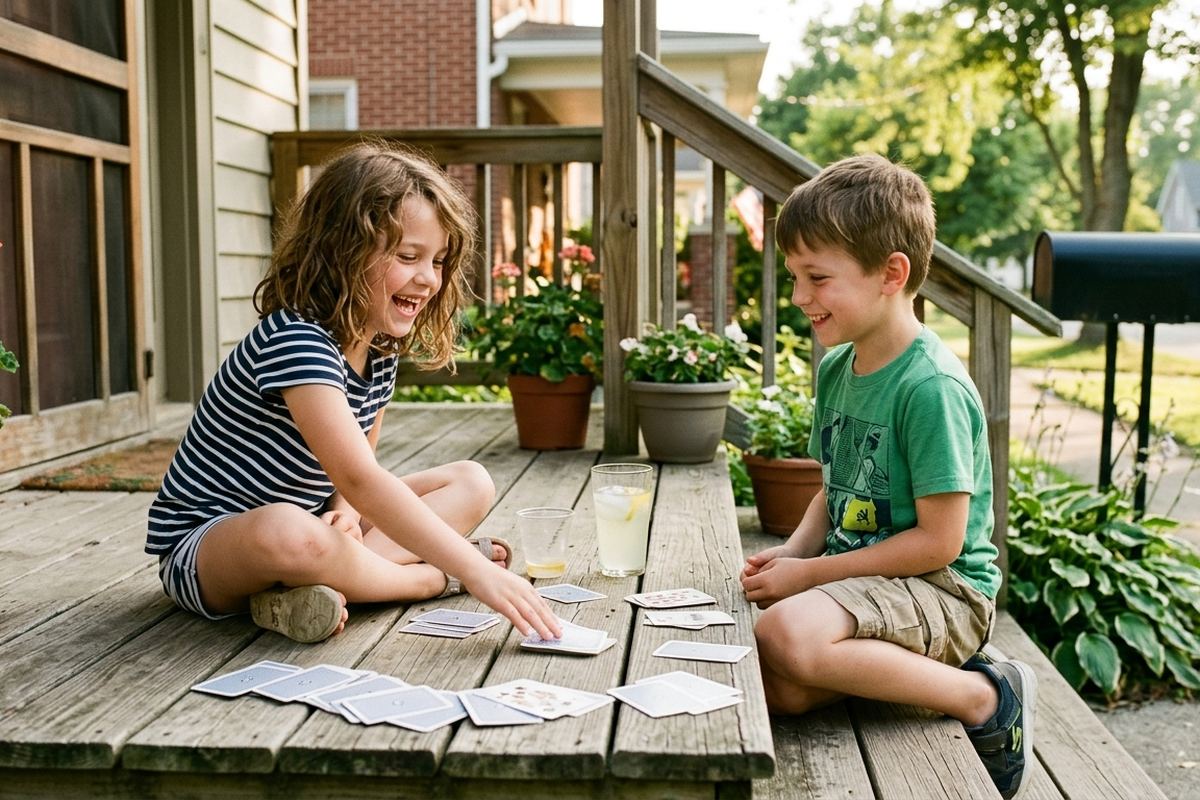
Camps, chores and card games all count
Summer learning does not have to look like school. Some of the best brain work looks like kids being busy, bored, helpful, or mildly competitive.
Camp counts, even a very muddy, very loud one. Kids follow directions, read schedules, and figure out how to survive the craft table when the good scissors are gone. Chores count: cooking is fractions and sequencing, grocery shopping is estimation, and setting the table for five when only four forks are clean is applied problem-solving, also known as family life.
Card games and board games are sneaky practice. War is number comparison. Yahtzee is addition and probability before anyone says the word probability. Even tic-tac-toe teaches planning ahead, which is harder than it looks when you are six and deeply confident.
For rainy afternoons or the long visit to Grandma’s, a puzzle book in the bag is handy. Use them like snacks, not medicine. A few pages here and there. Nobody has to finish the whole thing, unless your child is the rare kid who loves completing every page in order, in which case please send them over to organize my classroom closet.
The last two weeks before school starts
The last stretch is less about cramming and more about easing the landing. A child who has been staying up late and living in flip-flops needs school routines more than academic review.
Start with sleep. Move bedtime earlier in small steps, even 15 minutes every few nights. Do one or two “school morning” practice runs: dressed, breakfast, teeth, out the door before the day melts.
Then warm up the basics. Younger kids: read daily, write their name or a short note, count things around the house. A sticky note that says “I love your drawing” is reading practice. Older kids: independent reading, a little fact review, and writing with a real purpose, like a packing list or three sentences about the best part of summer. If they groan, accept the groan. The pencil still moves.
Talk through school feelings in plain questions: “What are you looking forward to?” “What feels annoying?” Some kids answer in the car, some at bedtime, some say “nothing” and then reveal their entire emotional life while you unload the dishwasher. A little review, a little routine, a lot less panic. That is usually enough to get the school brain back online.


