

The gift bag is still on the counter. Your child has eaten the candy, built the Lego set, and left the tissue paper to the dog. Then you say "time to write a thank-you note," and the same kid who can talk for fourteen straight minutes about Minecraft suddenly has no words at all.
Why thank-you notes are secretly great writing practice
Thank-you notes look tiny. That's exactly why they work.
A full page of writing feels like a mountain to most elementary-school kids. A thank-you note is one small hill with a real person on the other end, a real reason to write, and a natural finish line. That's the sweet spot for young writers.
At school, kids mostly write because the teacher assigned it. A thank-you note shows that writing actually does something. It tells Grandma you noticed the dinosaur pajamas. It tells Aunt Jen you got the book and, against all odds, opened it. Along the way your child practices the things teachers care about anyway: naming a topic, adding a detail, finishing a sentence, rereading before sending. But it's over in ten minutes, so it never feels like a writing lesson crash-landed in the middle of Saturday.
And small is not cheating. A three-sentence note counts. A dictated note in your child's own words counts. A wobbly card that says "Thank you for the game. I like the dragon. Love, Max" absolutely counts. If writing anything at all tends to end in tears at your house, start with getting words on paper without a fight and come back to the notes later.
The three-sentence formula kids can actually manage
Most kids do better with a formula. Adults use them too; we just call them templates and feel clever about it.
- Thank you for the specific thing.
- Add one real detail.
- Say something warm to close.
That's the whole note. For a kindergartner it might come out as "Thank you for the truck. I like the big wheels. I miss you." A 3rd grader can stretch a little: "Thank you for the art kit. I used the blue paint first because it looked like ocean water. I can't wait to show you what I made."
The middle sentence is the magic one. It turns "thanks for the gift" into something that sounds like your actual child. If they're stuck, ask one small question: "What did you do with it first?" or "What part did you notice right away?" For money, the detail is what it might become. "I'm saving it for the Lego jet." Good enough.
One warning. Don't make them write "I appreciate your generosity" unless your child genuinely talks like a small bank manager. Real words beat greeting-card words every time.
What to expect at every age (dictated notes count)
Pre-K and kindergarten kids (roughly 4 to 6) usually can't write a whole note alone. Some can sign their name. Some draw a picture and add a proud string of letters. Most can dictate a sentence while you write it, and at this age the goal is connection, so write down exactly what they say. If that's "the shark is very chompy," even better. Nana will frame it.
In 1st and 2nd grade, many kids can write one sentence with support, spelled creatively. "Thank you for the pooty slime" may need a second read, but if Aunt Jen can decode it, you're done. Resist turning the note into a spelling test; those invented spellings are actually a good sign at this stage.
By 3rd or 4th grade, most kids can run the three-sentence formula themselves, though the words may still slide off the card like a runaway hamster. By 5th and 6th, they can write independently but won't exactly sprint toward the stationery. A clear, boring expectation helps: "Three notes, three sentences each, bring them to me to address."
If handwriting itself is the wall, shrink the message, let them type it, or split the job: they dictate, you write, they sign. And if writing regularly brings distress way beyond what other chores produce, that's worth mentioning to the teacher at some point. Once, calmly.
Make it painless: timing, supplies, and the stamp trick
The worst possible time to ask for a thank-you note is 8:12 on a school night, after bath, when someone has lost a library book and the lunchbox smells mysterious.
Pick a better window. Ten minutes after Saturday breakfast works for a lot of kids. Right after opening gifts works too, while the excitement is fresh. For birthday hauls, try a "before the toy gets absorbed into the house" rule: open, enjoy, write two notes, then play.
Keep a small kit in one drawer so you're not hunting envelopes while your child slowly melts off the chair: blank cards or folded printer paper, envelopes, a pen that works, stamps, and an address list for the usual suspects.
Then the stamp trick: let your child put the stamp on. It sounds too simple, but kids love a real job, and the stamp makes the whole thing official. It also gives the task a clean ending. Write, sign, seal, stamp, walk it to the mailbox. Done.
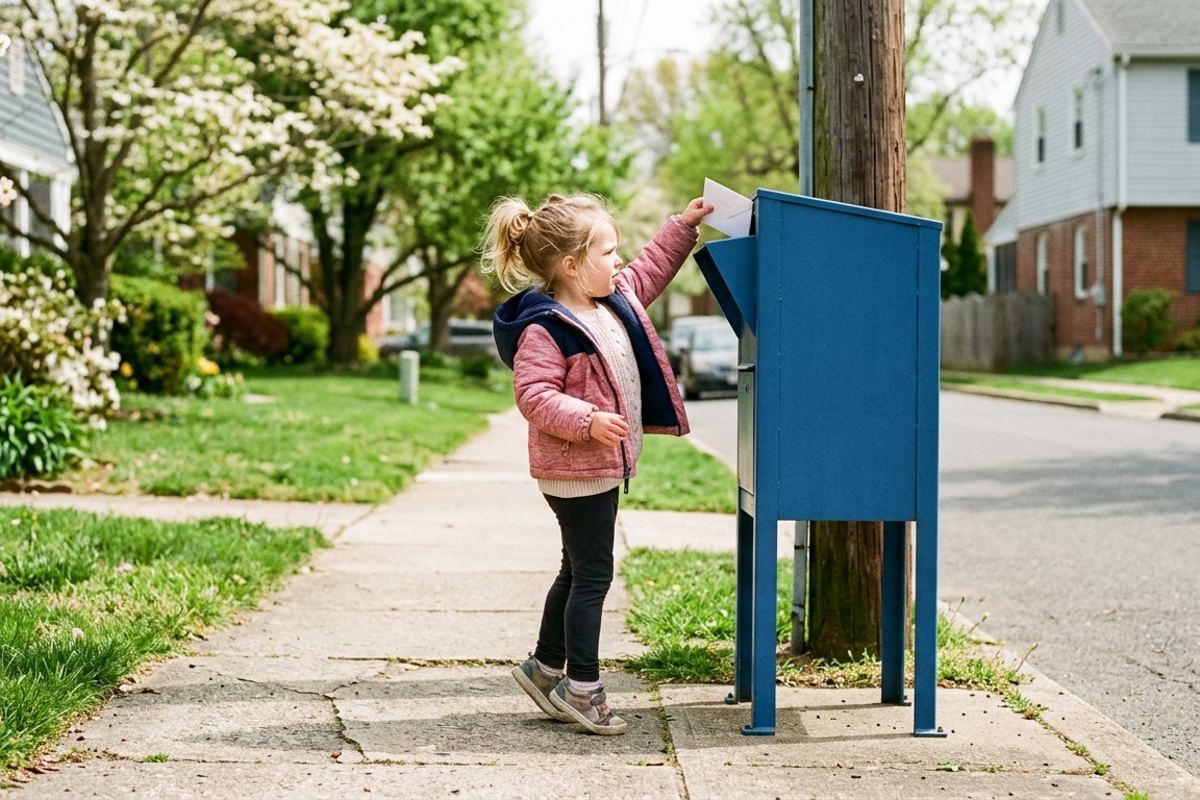
Keep the batch small. "We're doing two notes today," not the entire party pile. A kid who warms up slowly can start with something low-stakes first, like a few minutes of coloring or a quick round of hangman, and then slide into the note while the pencil is already moving.
One more practical move: stick the giver's name on each gift as it's opened. Future you has enough to do.
When your kid flat-out refuses
Refusal usually means the task feels too hard, too boring, or too forced. Sometimes all three in a party hat.
Lower the drama first. A thank-you note is good manners, sure, but a 45-minute standoff teaches your child that writing is where happiness goes to die. Keep your voice flat. Flat is powerful.
Offer a choice that still ends in a note: "You can write it or dictate it and sign your name." "Grandma's note first or Uncle Rob's?" "Blue card or dinosaur paper?" Skip the fake choice of "do you want to write your notes?" because many children will answer that one honestly, and then everyone is stuck.
If your child shrugs "I don't care," you can be plain about it: "You don't have to feel grateful every second to write one. Somebody thought of you, and this is how we answer." No speech. No violins.
For a truly dug-in kid, do one note together. You write the first sentence, they write the second. They draw, you take dictation word for word. "Thanks for the flashlight. I used it under my blanket" is a real note, and Grandpa will probably like it better than the polished version anyway.


