

The homework folder is somewhere under a sweatshirt, dinner is doing that thing where it almost burns, and someone is arguing that 17 is "basically the same as 70." Perfect. You have time for exactly one tiny math ritual, and it should feel more like a kitchen-table bet than schoolwork.
The whole game in one paragraph
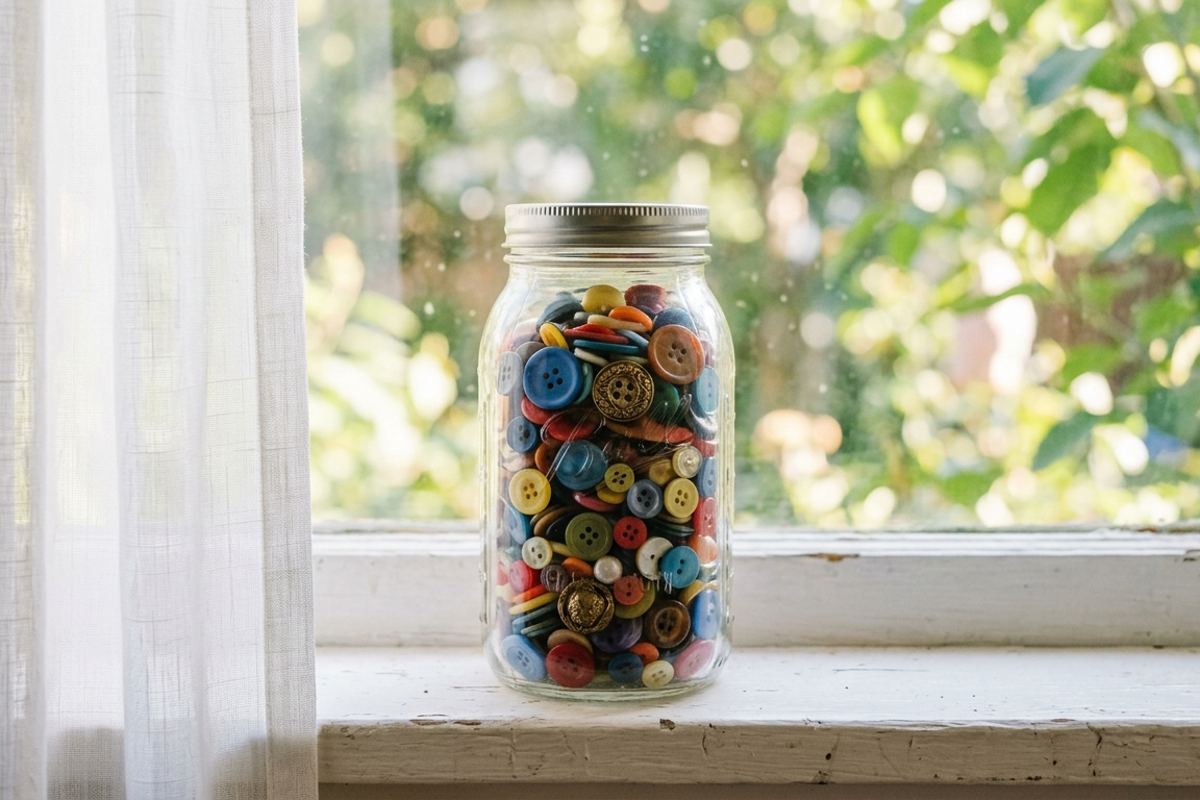
Find a clear jar. Fill it with one kind of thing: buttons, pennies, cereal pieces, cotton balls, dry pasta. Everyone looks, thinks, and writes down a guess for how many are inside. Then you dump it out and count together. Closest guess wins bragging rights until next week. That is the whole game.
No app, no worksheet, no laminated chart unless laminating is how you relax, in which case, carry on. The estimation jar survives real family life because it is small. It fits after dinner, before bath, while someone is still wearing one shin guard.
Two practical notes. Write the guesses down before anyone says theirs out loud; the sibling who changes their answer after hearing a better one is a normal sibling, and paper solves it. And pick a countable amount: 30 to 80 items for younger kids, 100 to 300 for older ones.
Why guessing at buttons is heavyweight math
Estimation looks like guessing, which is why kids will actually do it. Underneath, it is number sense in sneakers.
When your child looks at a jar and says "40," they are quietly judging size, space, and reasonableness. Is 400 possible? Only if the buttons are tiny. Is 4 possible? Not unless the jar is mostly air. That "too big, too small, about right" muscle is the same one that later makes a 2nd grader notice that 19 + 22 cannot be 402, and a 4th grader think "my answer should be near 8, not 80." It grows out of the same root as all early number sense, and it matters more than most worksheet skills; there is a reason teachers call estimating the most underrated skill in elementary math.
The jar also gives your child a safe place to be wrong. Estimation is not about magically knowing. It is about making a reasonable guess, hearing other guesses, and adjusting next week. After everyone writes a number, you can add one teacher question, lightly: "What made you pick that?" Answers will range from "I counted the top row and guessed the rest" to "I just like 57." All of those are data. Even the 57.
The count is where the good stuff hides
The guessing is fun. The counting is the sneaky lesson.
Dump the jar and resist counting one by one to 137. Make piles of ten instead. Ten buttons, ten buttons, ten buttons, leftovers at the end. Then count the piles: "Eight groups of ten is 80, and 6 more makes 86." That is place value wearing a fake mustache, and for a 1st or 2nd grader it is gold. Plenty of kids can recite numbers long before they truly believe that 86 means 8 tens and 6 ones. Eight piles sitting on the table make the number much less slippery.
Littles can help by making trains of ten and touching each item. Older kids can run the whole count, use groups of 25 or 50 for tiny items, or audit a sibling's piles. If you have a child who enjoys being official, a sticky note that says "Counter in Chief" goes a long way. Power changes people, but usually only for five minutes.
Then compare the guesses. The jar had 86, your child guessed 75: they were 11 off. Grandma guessed 500: the room gets to enjoy that. Suddenly subtraction has a purpose, namely justice.
Making it work for a 4-year-old and a 10-year-old at once
One jar can serve a preschooler and a 5th grader at the same table. You just change the job.
For a 4-year-old, open-ended guessing feels like being asked to name all the moons of Jupiter. Give two choices: "More like 10 or more like 50?" Or show a handful: "This is 10. Does the jar have more than this or less?" A kindergartner can pick from three numbers, or place sticky notes marked too low, too high, and my guess.
A 3rd, 4th, or 5th grader can estimate by sections: about 25 marbles in the bottom layer, the jar looks four layers tall, so around 100. That is multiplication, volume, and proportional thinking hiding inside a peanut butter jar. Older kids also start noticing packing: cotton balls leave gaps, rice does not, and the same jar can hold 45 plastic dinosaurs or 600 dried beans. When a 10-year-old mutters "no way there are only 80," that is real mathematical reasoning.
Ways to keep the jar interesting
The same jar becomes a new puzzle every time the contents change, because kids slowly learn that size and number do not match in a simple way.
Easy twists:
- A different kid fills the jar each week, in secret if possible.
- Seasonal filler: candy corn, acorns, jingle bells, shells from the vacation bag you still have not unpacked.
- Guess the weight instead, with a kitchen scale, for older kids.
- Two jars, same count, very different sizes.
- Same jar, two rounds: "Which will be more, cotton balls or pennies?"
The kid-filled jar is the best of these because your child becomes the designer of the math problem. They have to pick something tricky but fair. A jar packed to the lid with sprinkles is memorable, yes, but someone has to count them, and that someone will be you while everyone else wanders off to look for crackers.
If you have a recorder-of-things child who wants a follow-up page, a notebook with a running estimation log scratches the same itch. Another day, though. The jar already did its job tonight.
Keep it five minutes
The estimation jar survives because it is tiny. Protect that. Do not turn it into a weekly family math fair with trophies and a theme song, or it will last two weeks and the jar will become a home for dead markers.
A rhythm that works: fill the jar Sunday night, guess Monday after dinner, count in tens, announce the winner, put the jar back on the counter and forget it exists until next week. Skip weeks freely. If soccer runs late or the baby dumps applesauce into a shoe, the jar can wait. Family rituals that require perfect attendance just become one more thing to fail at.
No prizes needed. Bragging rights are enough, especially if the adults play too, because children love watching grown-ups be wildly wrong. The only firm rule: everyone writes their own guess before hearing anyone else's. It gives quieter kids room to think and keeps the bold sibling from becoming the family answer key. Then count, laugh, argue politely about who was closest, and put the lid back on. Five minutes of math. No pencil sharpening required.


