

The math paper comes out of the backpack wrinkled, and your child says, "I don't get why the 2 means twenty." Fair. Place value is one of those ideas adults use all day without thinking, then suddenly have to explain at the kitchen table with a tired 7-year-old and a pencil that has no eraser left.
Why 23 isn't just "a two and a three"
Kids learn digits as little pictures first: 0, 1, 2, 3. So when two digits stand next to each other, why wouldn't they just be two separate numbers in a line? That's the honest starting point.
The big idea is that a digit's value depends on where it sits. In 23, the 3 means three ones, but the 2 doesn't mean two. It means two tens. A phrase that works with kids: "The place tells the digit what job to do." The 2 in 23 has a tens job. The 2 in 203 has a hundreds job. Same digit, different job.
This one quiet idea sits underneath nearly everything in elementary math. Regrouping, comparing numbers, rounding, money, decimals, long division, reading big numbers out loud. All of it leans on where the digit sits. So when your child reads 23 as "two-three," they're not being careless. They're mid-move between seeing digits as symbols and seeing numbers as groups, and that move takes time.
The bundling idea: tens are the whole trick
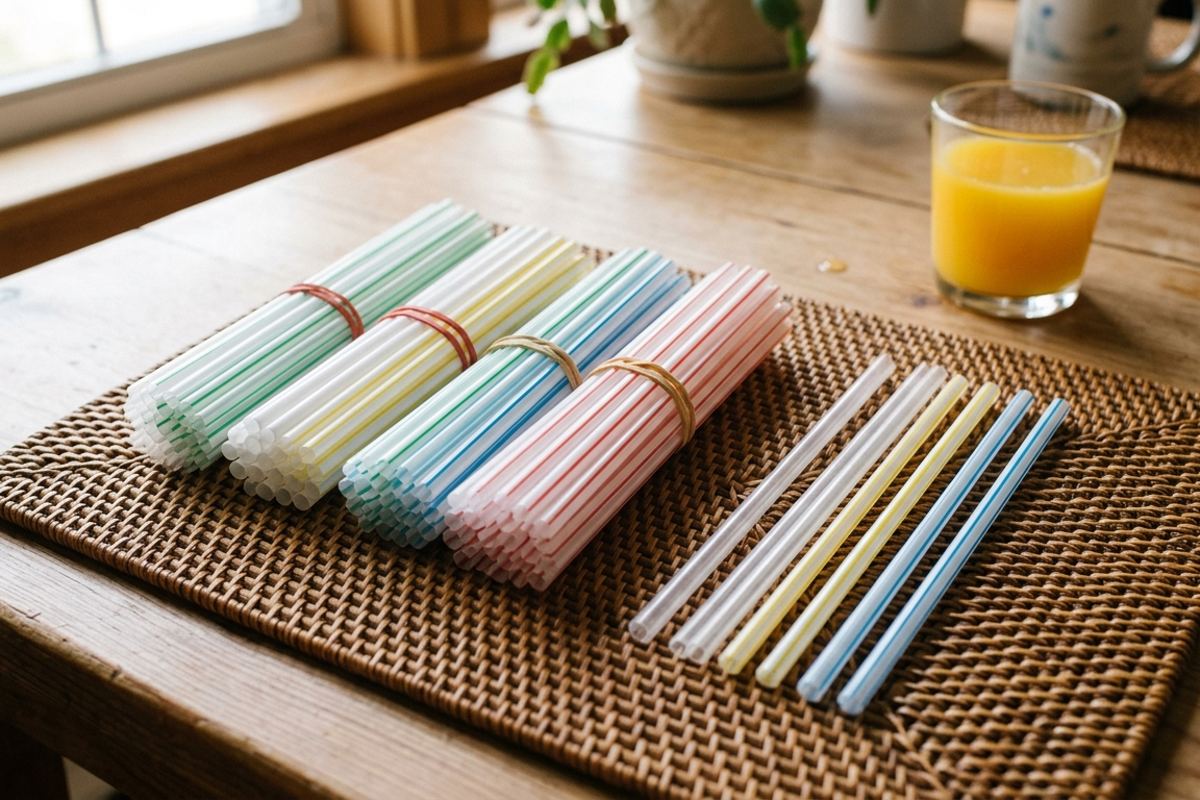
Place value makes far more sense when kids can touch it. The core is bundling: when you have ten ones, you trade them for one ten. Ten straws get wrapped in a rubber band. Ten pennies become a dime. Now 23 isn't mysterious at all. Two bundles and three loose ones. Done.
Regrouping grows straight out of this. When 34 + 28 produces twelve ones, ten of them get bundled into a new ten and moved next door. Lots of kids can chant "carry the one" without knowing what's being carried; what's actually happening is a bundle trade. Subtraction's "borrowing" is the same trade in reverse: crack open one ten because the ones place ran short. (If the way your child's homework draws all this looks alien to you, sticks and dots and all, the new-math homework translator explains what those drawings are for.)
This is why teachers haul out base-ten blocks, ten-frames, and place-value mats. The tools slow the math down long enough for the idea to become visible. At home, nothing beats a pile of real objects on the table. Rubber bands snapping across the kitchen is practically a math rite of passage.
Why kids write 203 for twenty-three (and other honest mistakes)
When a child writes 203 for twenty-three, adults sputter. From the child's side, the mistake has logic: they hear "twenty," write 20, hear "three," write 3. They're writing what they hear. They just haven't learned yet that our system compresses 20 and 3 into two digits.
English doesn't help. "Twenty-three" at least says the tens first, but "thirteen" doesn't sound like ten-three, "eleven" and "twelve" are their own little weirdos, and forty mysteriously drops the u from four. No wonder 1st graders look suspicious.
Other classics you might see: 51 for fifteen, reading 306 as "thirty-six," insisting 98 beats 109 because "the digits are bigger," and stacking 7 + 42 into a strange left-aligned tower. Zeros deserve special patience. The 0 in 203 isn't "nothing"; it's holding the tens place so the 2 can keep its hundreds job. Take it out and you get a completely different number.
A gentle check question: "Which digit is in the tens place?" If a mistake keeps repeating on homework, jot it down and ask the teacher what they're seeing in class. No drama. Teachers would rather hear it early, while the fix is small.
Where place value shows up, grade by grade
Programs differ by district, but the path is fairly steady. Kindergarten works on teen numbers as the bridge: 14 means 10 and 4 more, built with ten-frames, cubes, and fingers. In 1st grade, kids build two-digit numbers from tens and ones and discover that 47 and 74 are very different animals despite matching digits. This is also where addition and subtraction strategies start leaning on making tens.
2nd grade stretches to hundreds and formal regrouping. If 52 minus 28 ends in tears, the problem is often not subtraction. It's unbundling. In 3rd grade, place value powers multiplication (4 groups of 30 is 120) and rounding, which is mostly place value plus judgment: is 386 closer to 300 or 400?
By 4th and 5th grade the numbers grow into the thousands and millions, and then decimals arrive, which is place value moving to the right of the point. That feels backwards at first because the pieces shrink instead of grow. A 5th grader needs to believe that 0.5 and 0.50 name the same amount, and money is the friendliest way in, since both mean fifty cents.
By upper elementary, place value stops being a chapter. It's the floor under the furniture.
Five-minute place-value moves at home
You don't need a mini classroom in the dining room. Five minutes with ordinary stuff beats a long cranky worksheet session.
- Straw bundles. Thirty or forty straws, craft sticks, or dry spaghetti if you're feeling brave. Bundle tens with rubber bands, leave some singles, ask "what number did we build?" Then reverse it: "build me 42."
- Money trades. Pennies and dimes are place value in disguise. "Show me 34 cents with dimes and pennies. Now show it a different way." If the coins have vanished into couch history, draw and label circles. (The grocery store version of this is its own goldmine; see the checkout game.)
- Number of the day. Grab one number from real life: 28 on a speed-limit sign, 156 on a receipt. "What's in the tens place? What's ten more? Ten less?" Keep it conversational. The moment it smells like a pop quiz, switch to snacks.
- Build it, say it, write it. For 64: build it with objects, say "six tens and four ones," write 60 + 4, then write 64. Four versions of one idea, connected.
For screen time that keeps numbers in the picture, a short round from the math games shelf works as dessert after the hands-on stuff. And whatever the activity, the best follow-up is one question: "How did you know?" The answer tells you whether your child is guessing, counting one by one, or genuinely thinking in tens. That last one is the sound of place value clicking into place.


